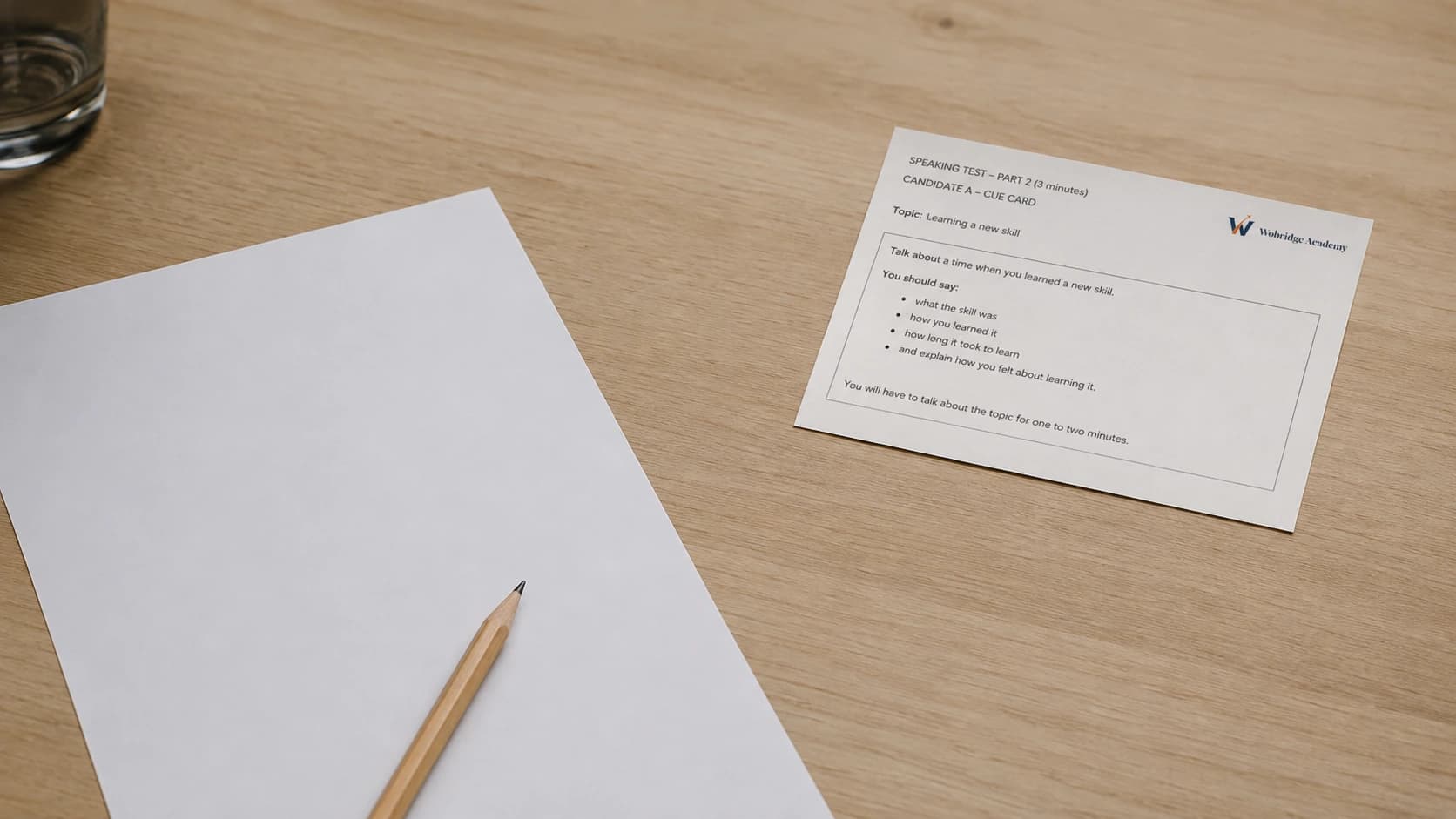
Part 2 gives you a cue card, one minute to prepare, then two minutes of uninterrupted speech. The hard part is not the content but not stopping halfway.
This article is about spending that minute so the two minutes run themselves.
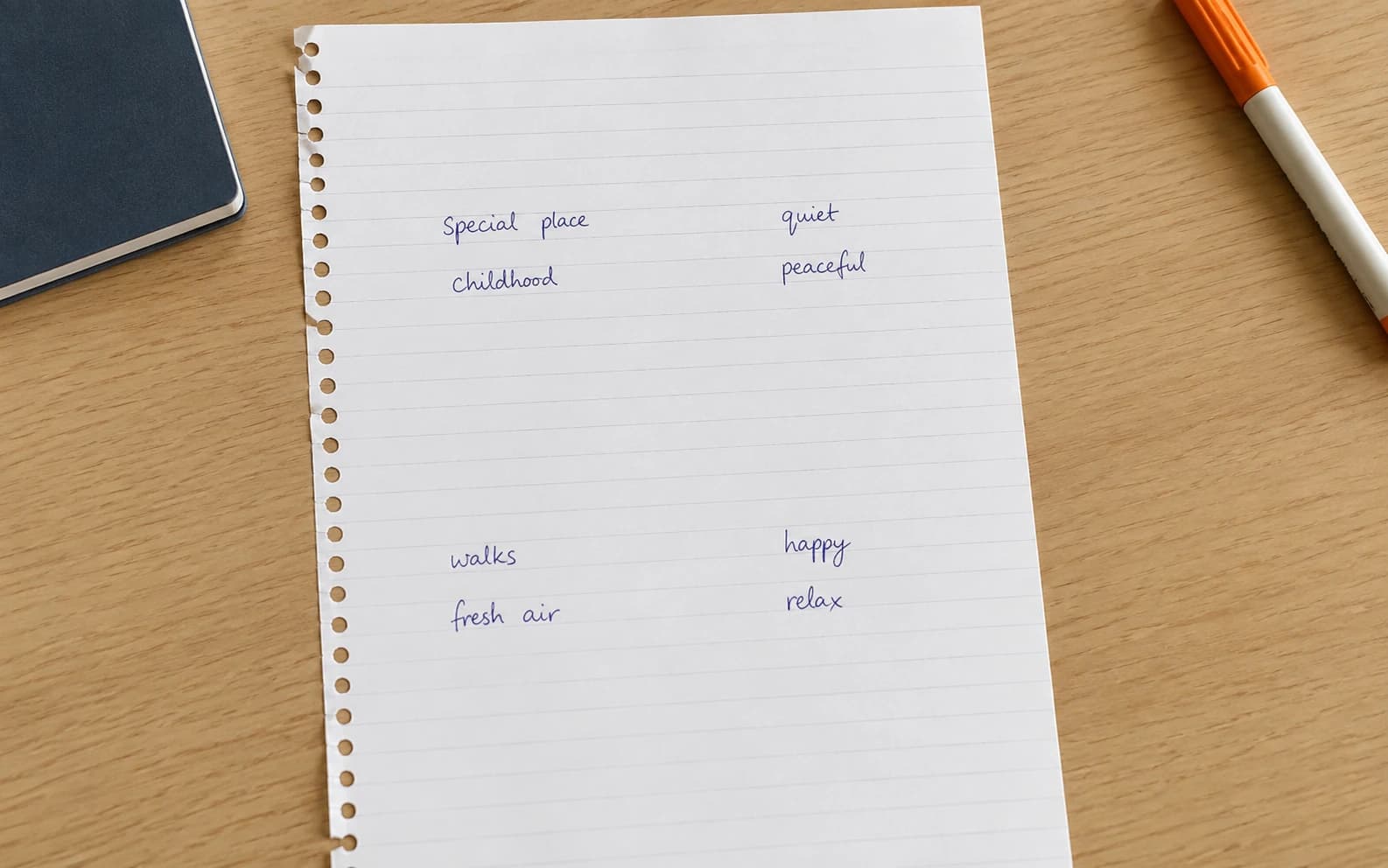
Note keywords, not sentences
A full written sentence costs about fifteen seconds, so a minute buys four — nowhere near two minutes of speech. Worse, you will try to read them back, and read-aloud sounds nothing like speech.
Six to eight keywords are enough: each one triggers a sentence, and that sentence is built as you speak, which is why it sounds natural.
The three bullets are your frame
Every cue card carries three bullets, and they have already divided the answer into three parts. Follow that order and you never lose your place mid-answer.
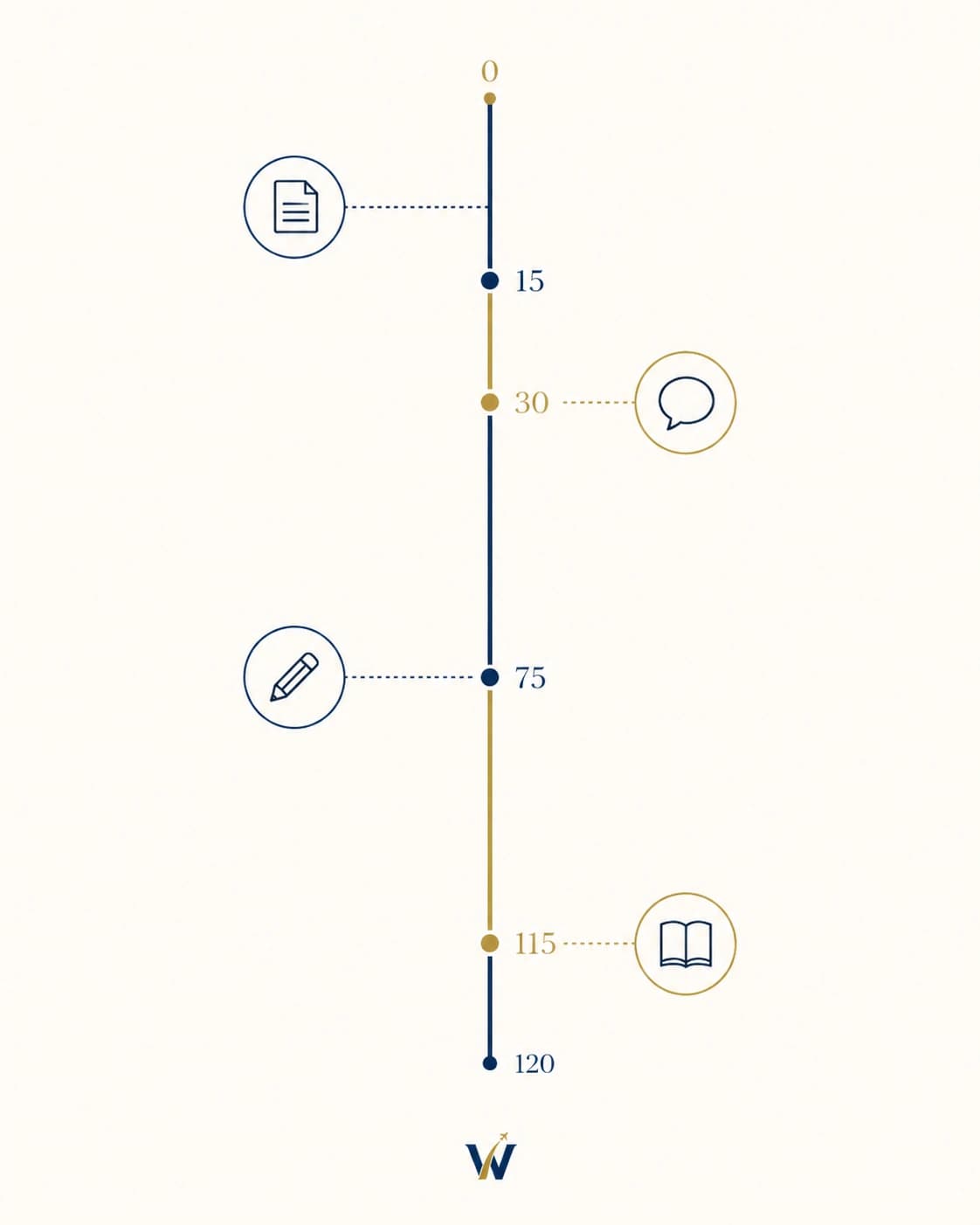
Give each bullet about thirty seconds; the last one usually sustains the longest — it tends to ask for feelings or reasons, the part with no factual ceiling.
| Stretch | What to cover |
|---|---|
| 0:00 – 0:30 | First bullet: set the scene |
| 0:30 – 1:00 | Second bullet: concrete detail |
| 1:00 – 2:00 | Third bullet: reasons, feelings, and one example |
When you run dry
Three ways to keep going
Add a concrete example: one occasion, one person, one place.
Compare it with something else: how it used to be, how it differs now.
Say why it matters to you — this one almost never runs out.
If the topic is unfamiliar, you may describe something close and say plainly that you are drawing a parallel. The test marks how you speak, not the accuracy of the anecdote.
Practise this with a real timer and a recording. Playback usually shows you stall at the same point every time — and that point is where a prepared continuation belongs.
The figures and rules in this article come from the test provider's published materials. Check the latest announcement before you register.
Topics
- Speaking
- Practice