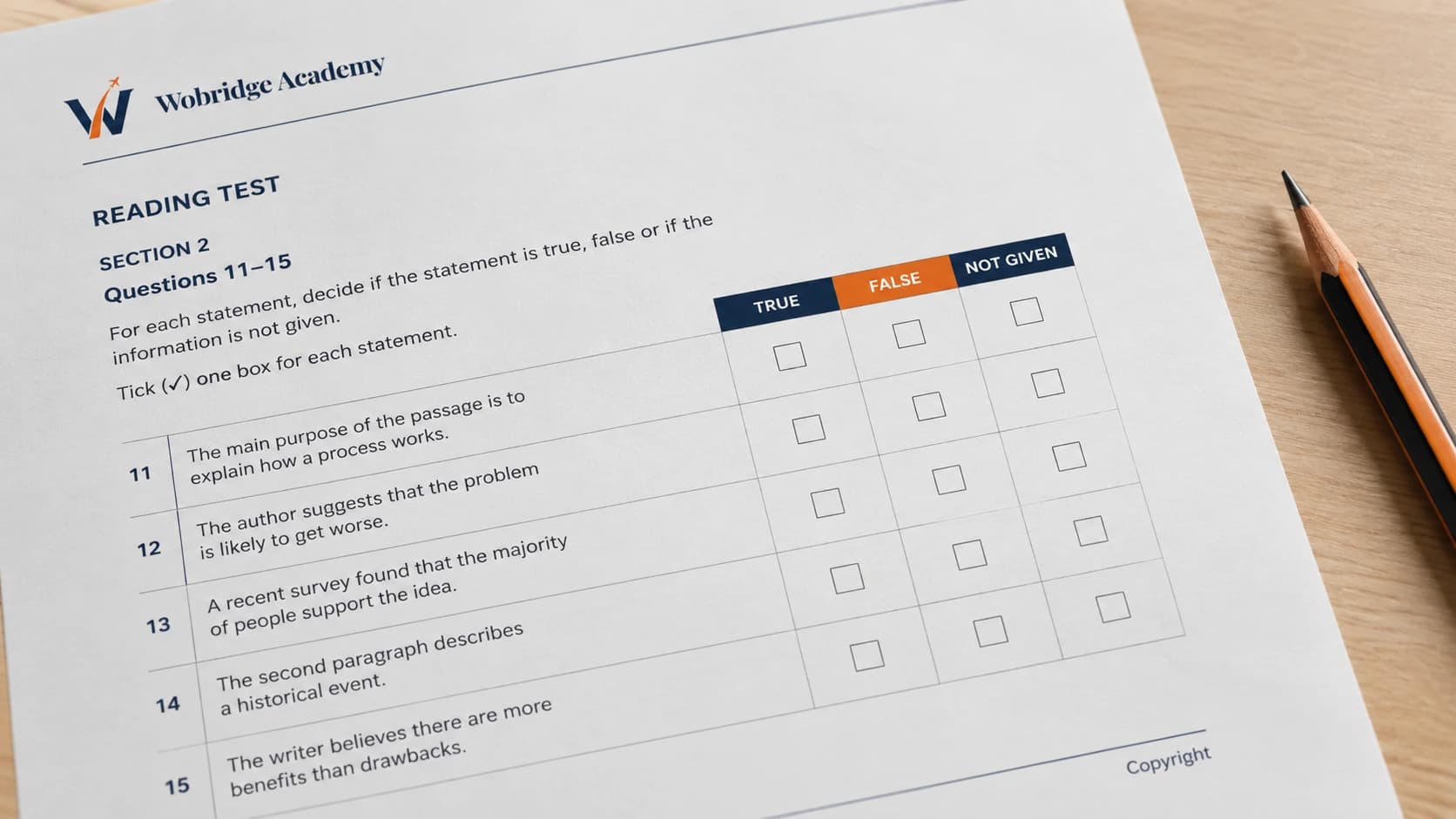
Of the three labels, only two describe what the passage says. The third describes an ABSENCE — and that is where most marks go.
This article separates the three by the question you have to ask for each, then covers the two usual traps.
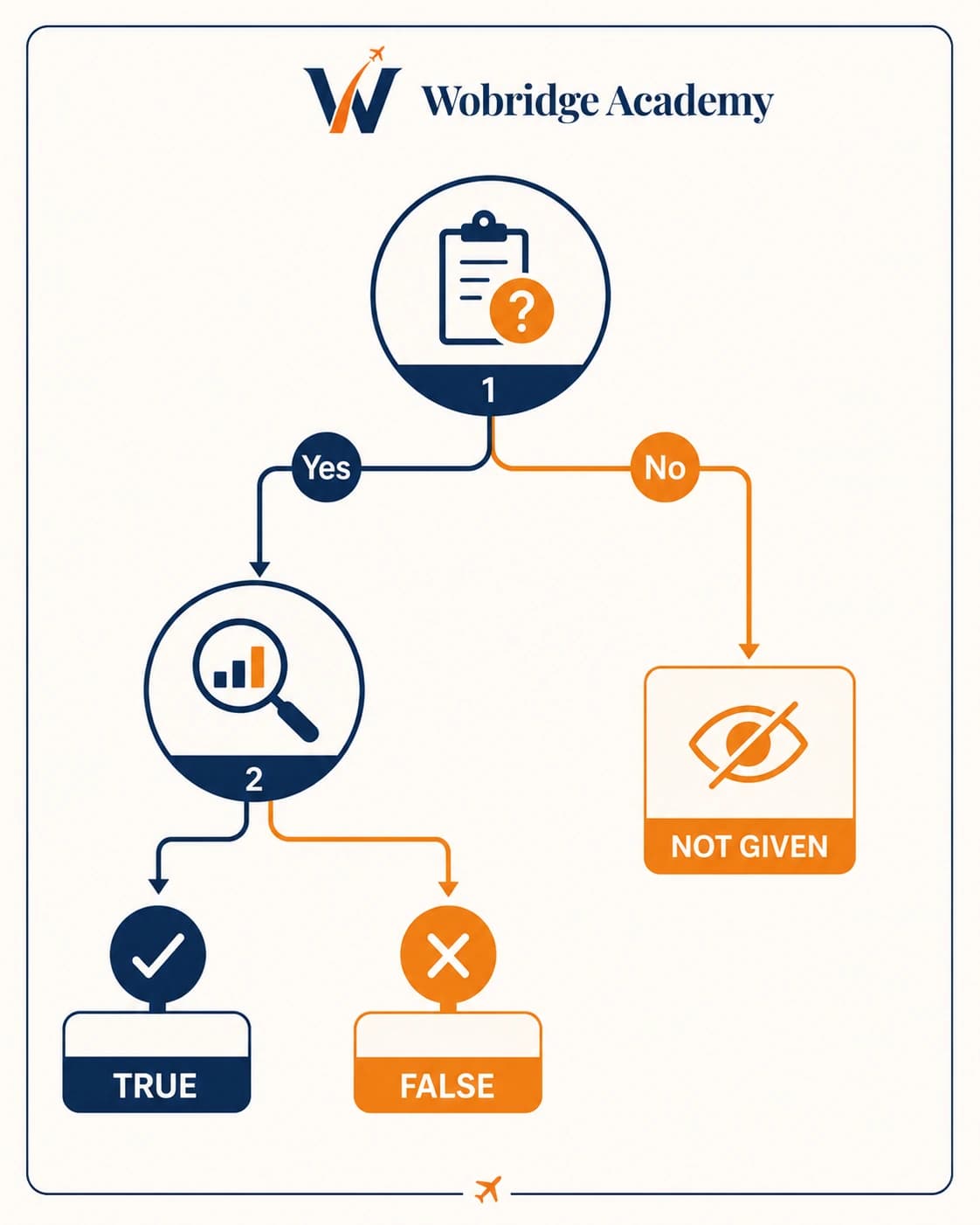
Three labels, three different questions
The paper does not ask whether the statement is true in the world. It asks what the passage says about it — and only the passage.
| Label | When to choose it |
|---|---|
| TRUE | The passage asserts the same thing, even in different words |
| FALSE | The passage states the opposite |
| NOT GIVEN | The passage does not say enough either way |
Trap one: using knowledge from outside the passage
A statement like “air pollution harms health” reads as obviously true, so the hand writes TRUE. But if the passage only discusses noise pollution, the answer is NOT GIVEN.
A quick test: you may write a label only if you can point at the SENTENCE that produced it. If you cannot point, it is NOT GIVEN.
Trap two: confusing FALSE with NOT GIVEN
FALSE requires the passage to contradict the statement — there must be a sentence that clashes with it. Silence is not contradiction.
The usual confusion involves absolutes (“every”, “always”, “never”). If the passage says “most” and the statement says “every”, that is FALSE — a real clash. If the passage says nothing about scope at all, it is still NOT GIVEN.
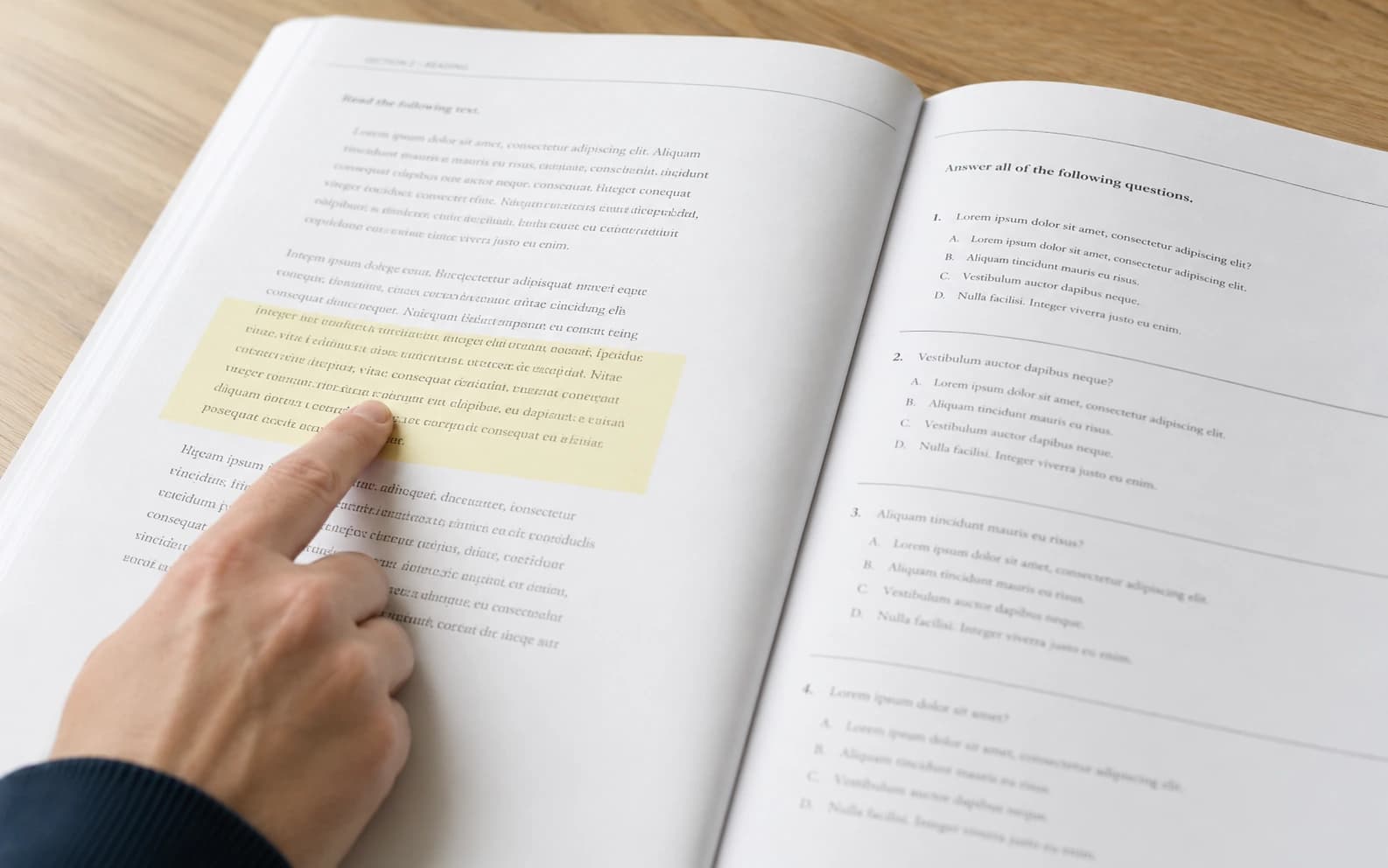
Working through a question
Four steps per statement
Underline the claim in the statement and ignore the framing.
Find the PARAGRAPH holding that claim — statements follow the order of the passage, so do not restart from the top.
Read the one or two sentences around it closely rather than skimming the paragraph.
Pick a label, then ask which sentence produced it. If you cannot answer, switch to NOT GIVEN.
Practise this type by marking your REASONS, not just right and wrong: a lucky guess teaches nothing about the next question.
The figures and rules in this article come from the test provider's published materials. Check the latest announcement before you register.
Topics
- Reading
- Practice