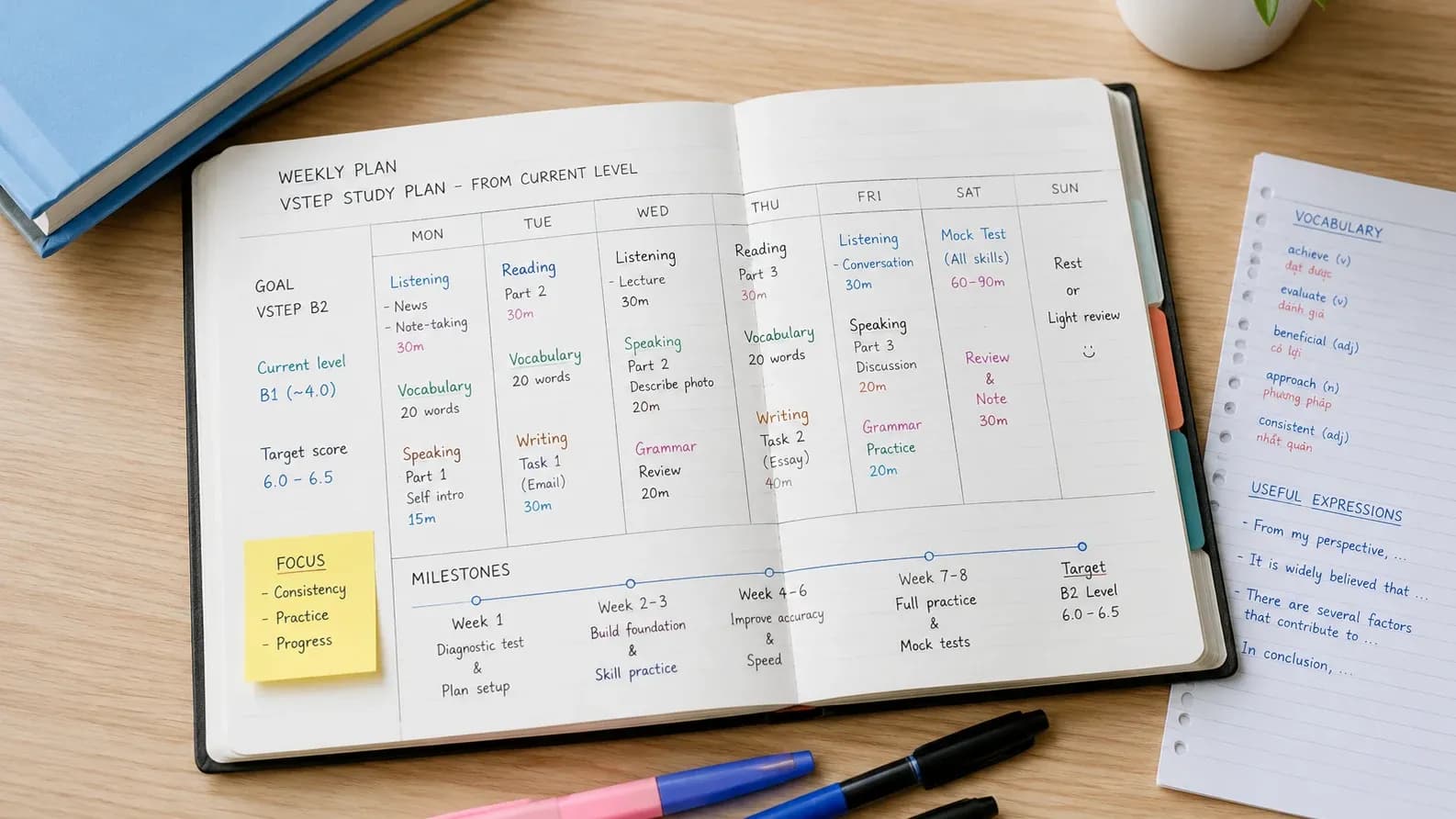
A three-month run has three phases, each with one main job. Blending them is the most common reason three months pass without the score moving.
This article describes the phases and the checkpoints between them.
Phase one: measure and repair
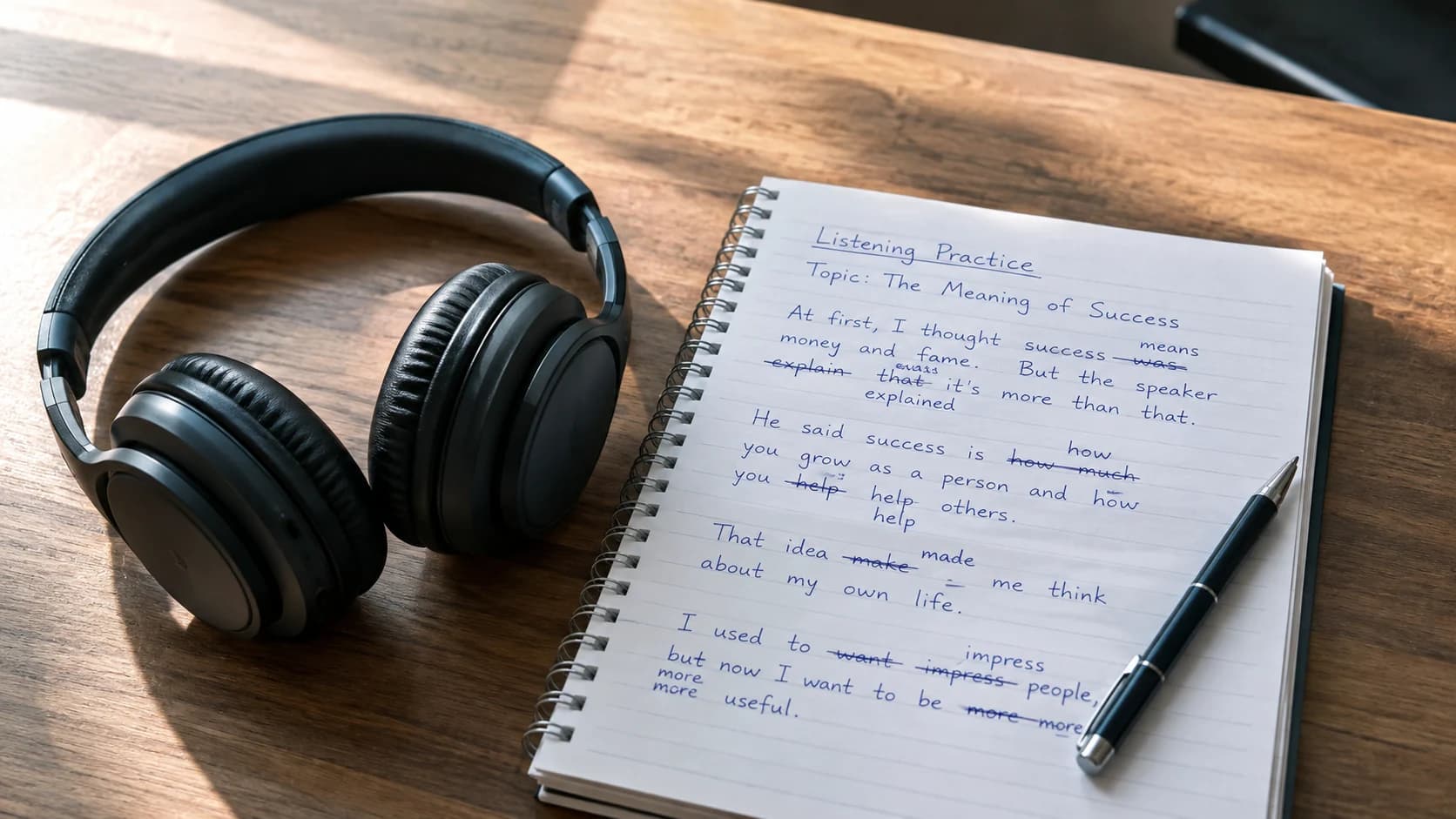
The first four weeks open with one full mock, marked honestly. That result is not there to judge you but to find the weakest skill.
After that, most of the time belongs to that skill, plus the shared foundation: academic vocabulary, common structures, a daily reading habit.
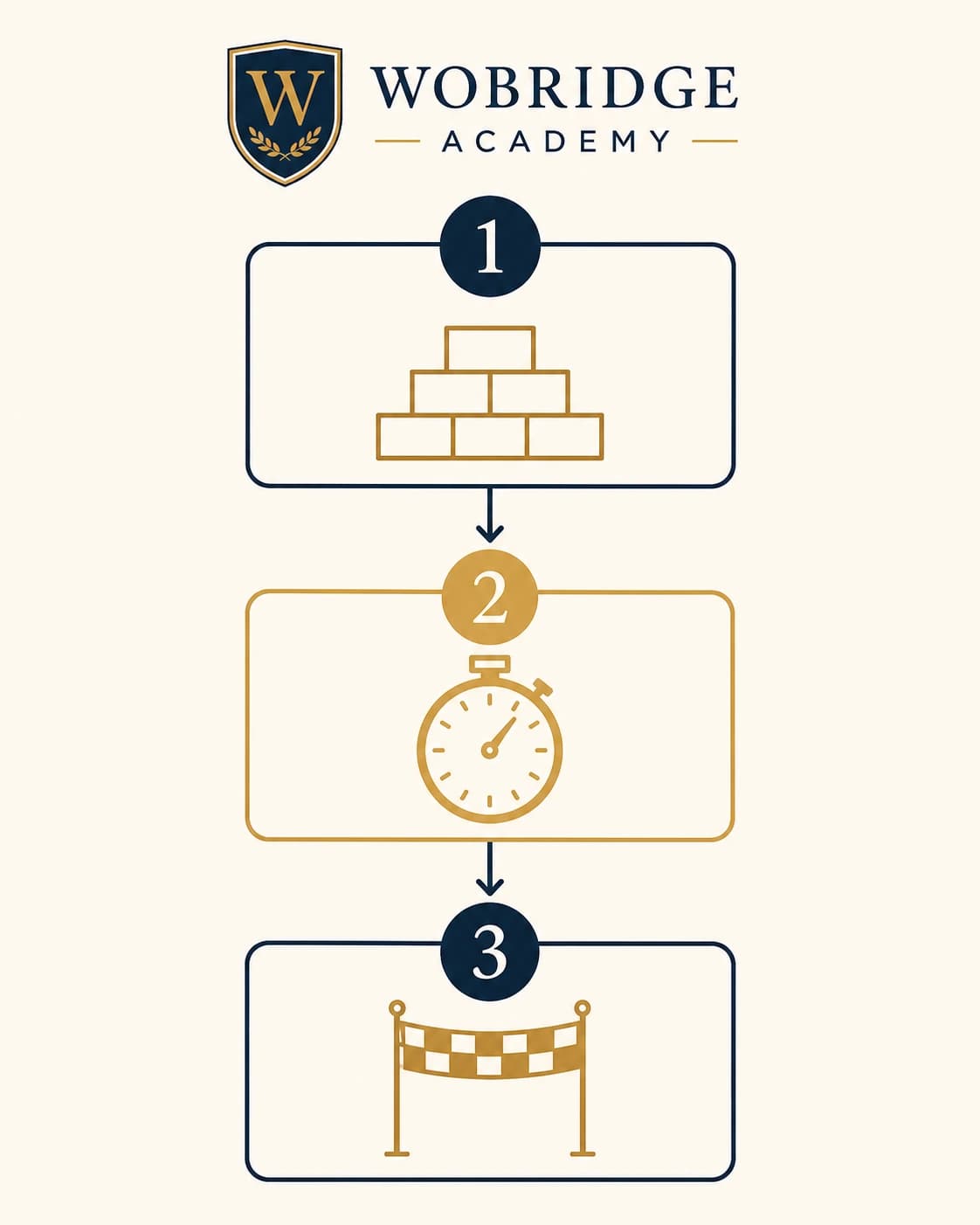
Phase two: question types
The middle four weeks go to one question type at a time. One type per week, enough repetitions to recognise its shape, then move on.
Full papers are premature here: they mix eight types into one sitting, and the result cannot tell you which type is failing.
| Phase | Main job | Checkpoint |
|---|---|---|
| Weeks 1–4 | Repair the weakest skill | One full mock at the start |
| Weeks 5–8 | One question type at a time | One timed section per week |
| Weeks 9–12 | Full timed papers | One complete paper per week |
Phase three: full papers
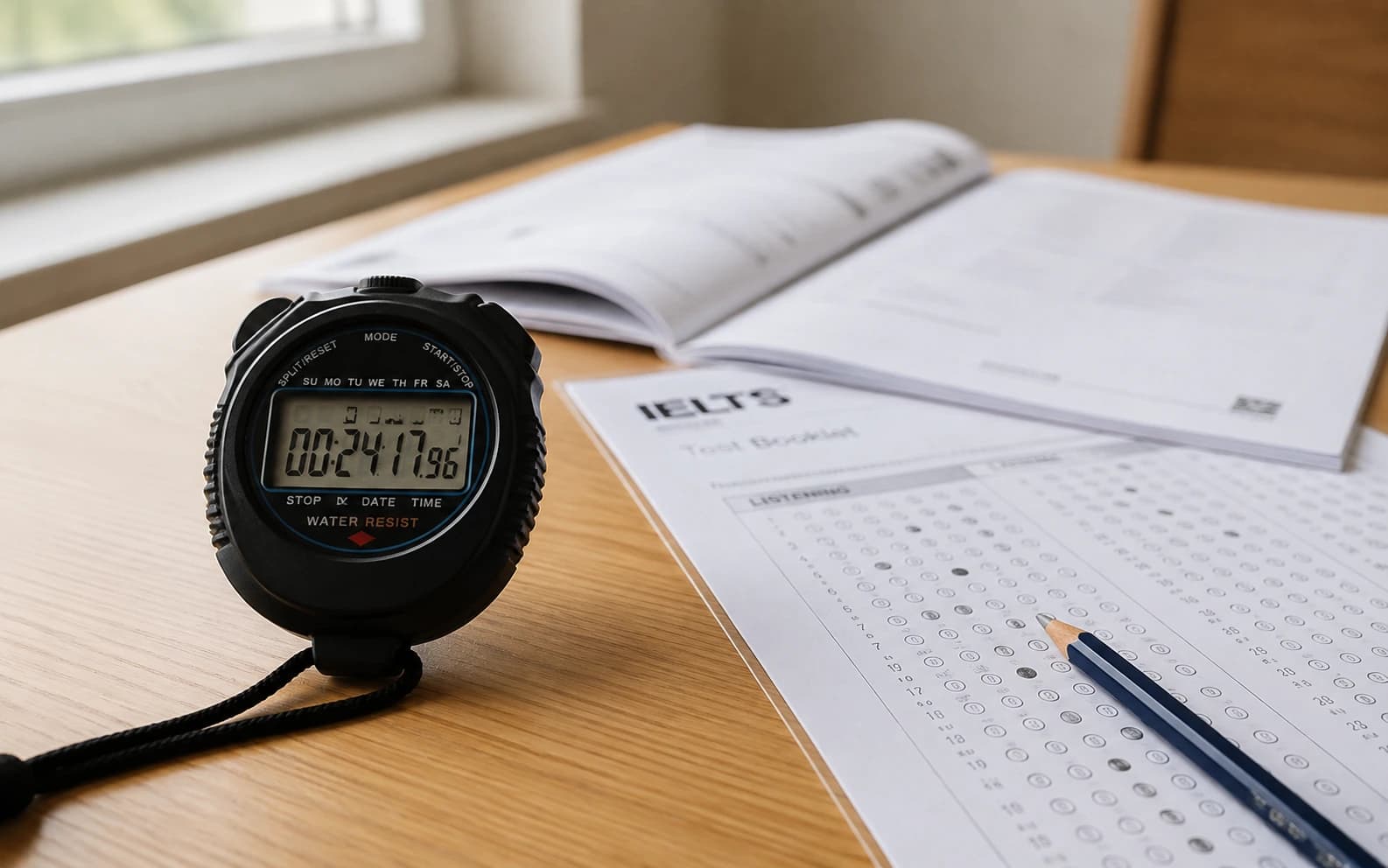
The last four weeks shift entirely to complete timed papers, sat in one stretch. Exam stamina is only built by sitting through an exam.
This phase learns NO new material. Whatever time remains goes to fixing your own repeated mistakes, which several papers will have exposed.
Three common mistakes
Three things that ruin a run
Doing full papers from week one — a flat line of similar scores that teaches nothing.
Splitting time evenly across four skills when one is clearly behind.
Learning new material in the final week instead of fixing known errors.
And the weekly checkpoint is what keeps the plan from drifting: without it, a learner stays busy without knowing whether anything is moving.
Topics
- Study plan
- Practice