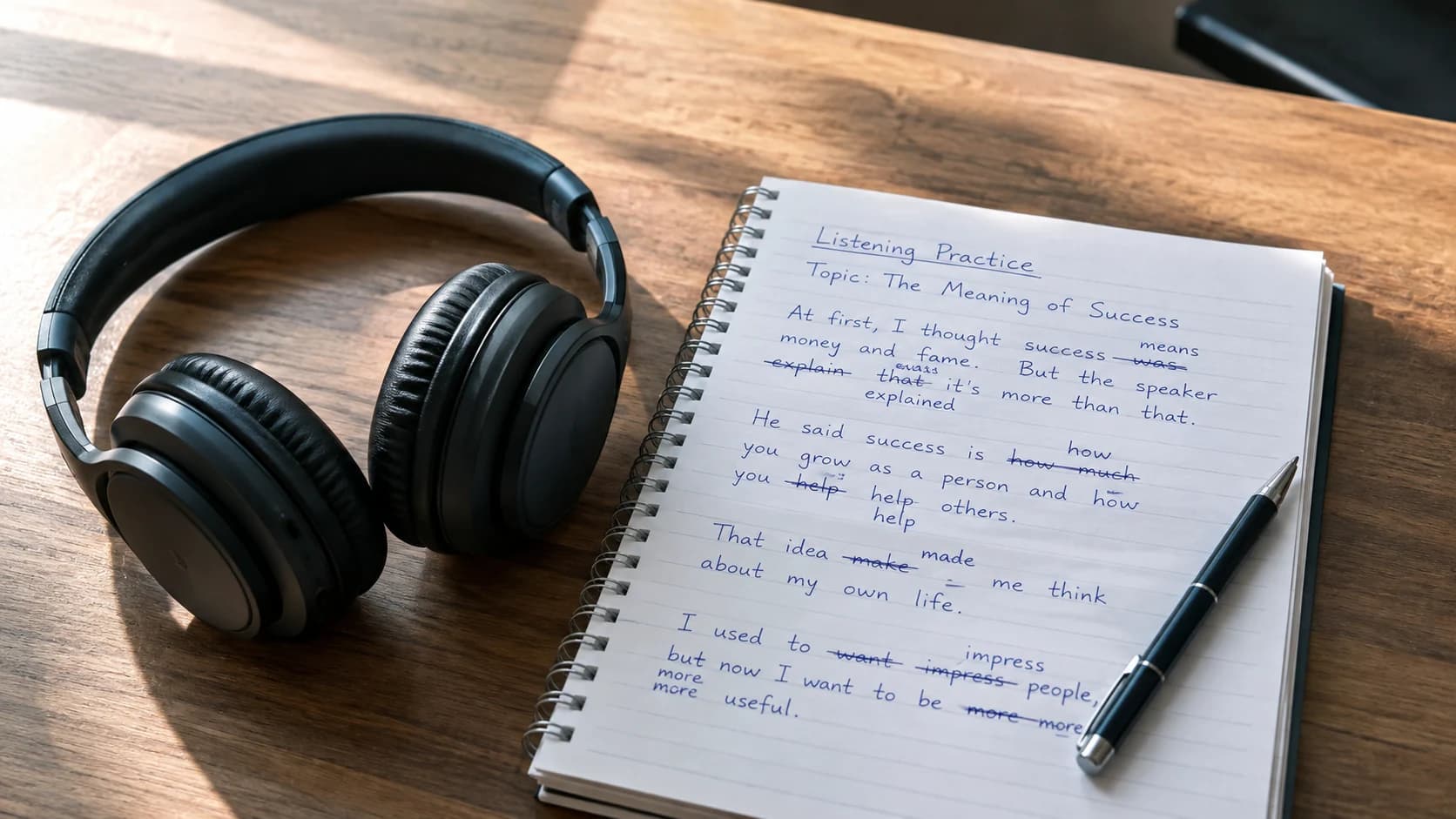
Learning words by topic has a real advantage: words in a group cue one another, so recalling one pulls the rest. But that advantage only appears if you record them well.
This article covers three decisions about recording, and one way to revise.
Record phrases, not words
The unit you retrieve while speaking is the PHRASE, not the word. So each entry should be the phrase the word appeared in, with the meaning of the whole phrase.
| Weaker entry | Better entry |
|---|---|
| research (n): nghiên cứu | carry out research: tiến hành nghiên cứu |
| decision (n): quyết định | make a decision: đưa ra quyết định |
| impact (n): tác động | have a lasting impact on: có tác động lâu dài tới |
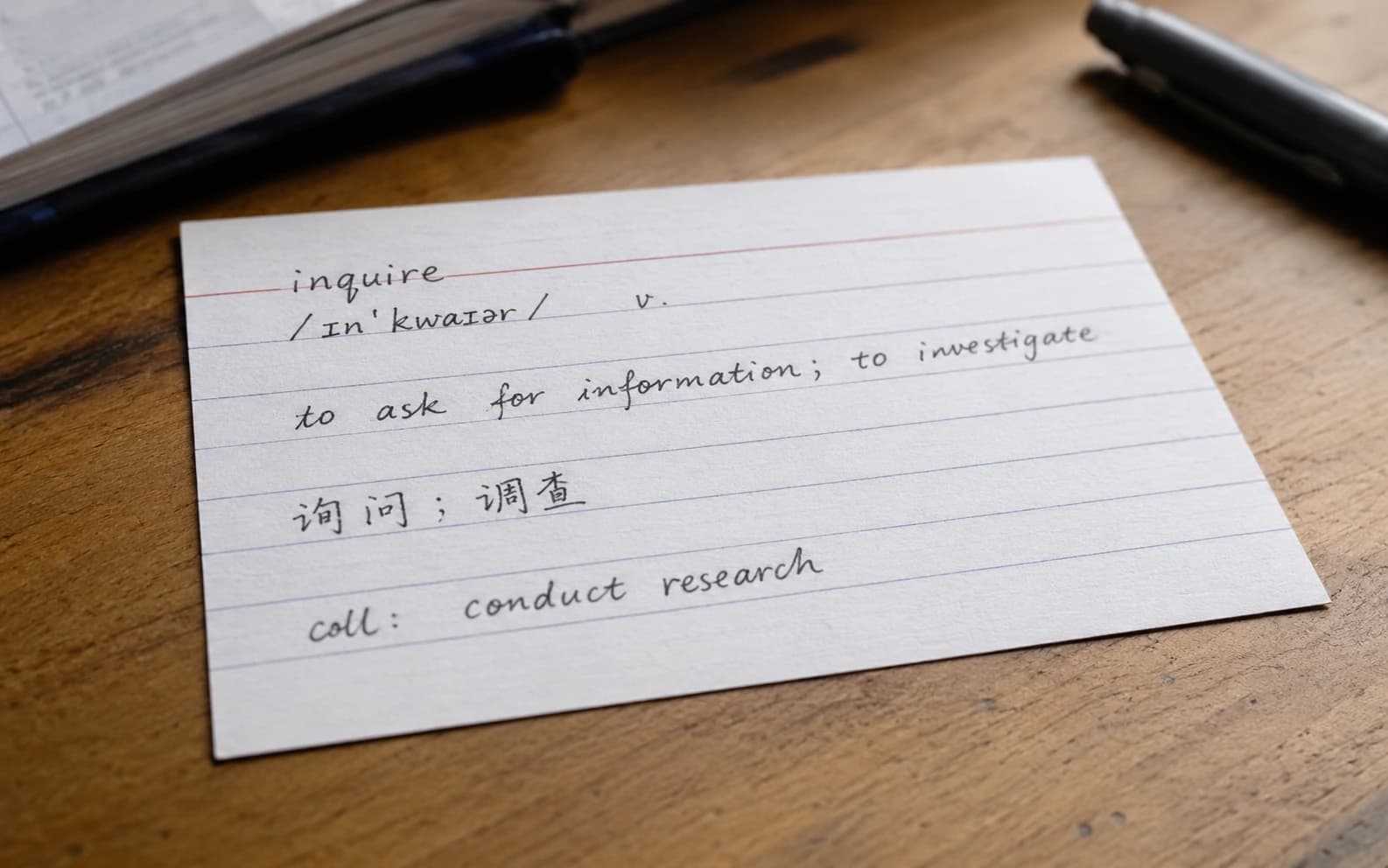
One sentence of your own per word
An example copied from a dictionary builds no connection, because it describes a situation that is not yours. A sentence about your own life does.
It does not have to be good. It has to be specific: someone you know, something you did, a place you go.
Topics of moderate width
A topic that is too broad (“education”) becomes a hundred-word list nobody revises. Too narrow (“final exams”) leaves a few words per page and loses the cueing advantage.
Twenty to thirty phrases per topic works: enough for them to cue each other, short enough to revise in one pass.
Revise by covering, not by reading
Four steps for one page
Cover the English, look at the meaning, retrieve the phrase.
Mark whatever you could not retrieve — only those need another pass.
For each marked phrase, say a new sentence containing it.
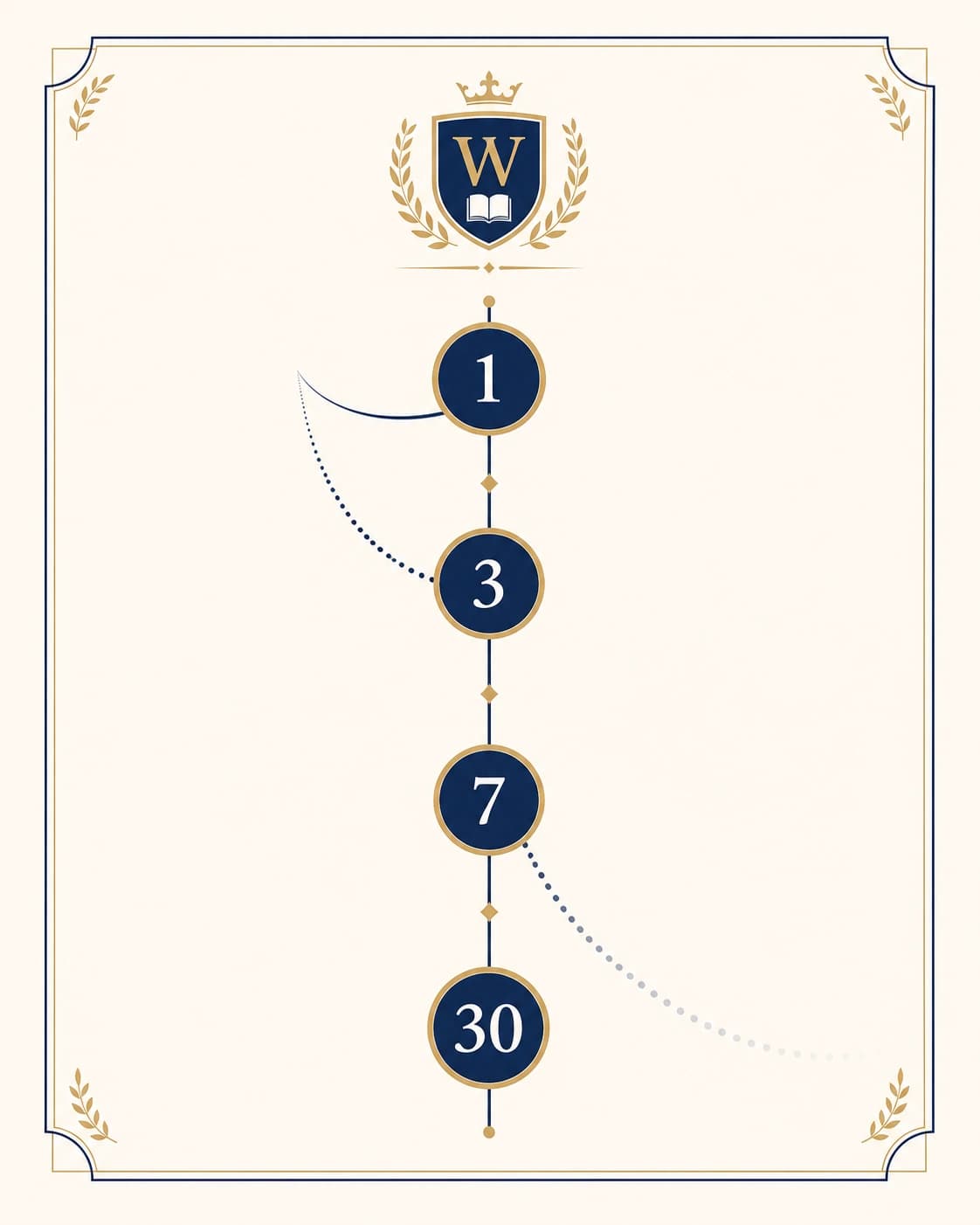
Come back days later and revise only the marked ones.
Rereading the page feels like revision, but it trains recognition — the direction that was already strong. Covering trains retrieval.
And the measure is how many phrases you can use while speaking, not how many lines are in the notebook.
Topics
- Vocabulary
- Practice