Starting from zero and studying consistently, most learners need about 7–10 months to reach German B1. Part-time learners usually need 12–18 months, sometimes longer. Your own number depends on the real hours you put in each week, not on the months printed on a course.
The short answer
From A0 at 18–25 hours a week: about 7–10 months.
From A0 at 7–10 hours a week: about 12–18 months.
With a solid A2: roughly 3–4 more months for B1.
Wobridge group classes: A1 3 months, A2 3 months, B1 4 months, 10 months in total.
What B1 actually means
B1 is the first intermediate level of the six CEFR levels, A1 to C2 (in German, GER). At this level you use German fairly independently in familiar situations: daily life, study and work.
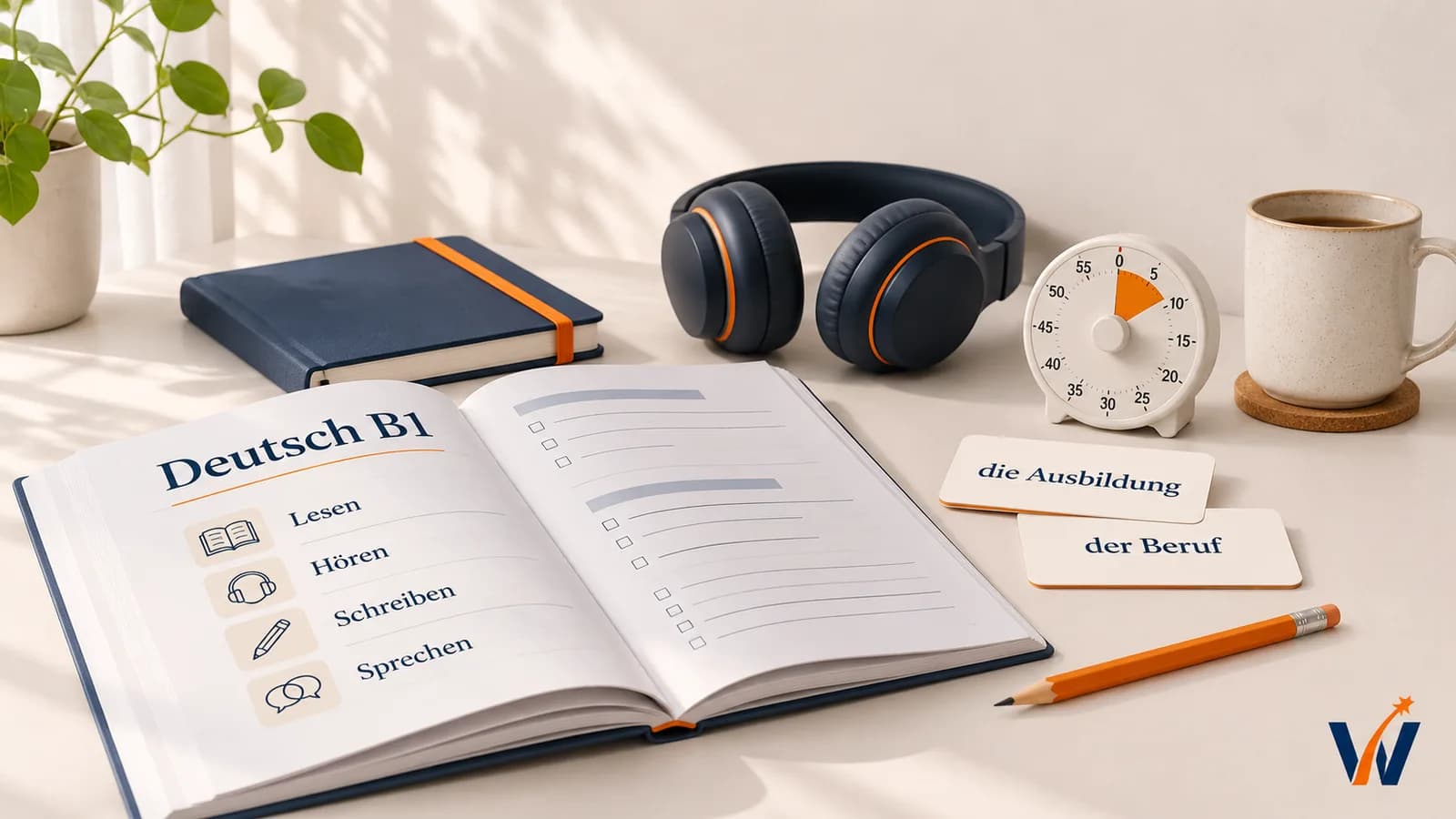
Hören (Listening): follow the main points of clear conversations, announcements and radio pieces on familiar topics.
Sprechen (Speaking): describe experiences, explain plans, give reasons and exchange opinions.
Lesen (Reading): pick out the main ideas and key details in emails, notices and general articles.
Schreiben (Writing): write connected emails, letters and short opinion texts.

A practical test: asked about an Ausbildung (vocational training), a B1 speaker can introduce themselves, explain why they chose the trade, talk about their next goals and handle follow-up questions without a memorised script.
Count hours, not months
The CEFR describes ability; it does not prescribe a number of months. Goethe-Institut estimates about 350–650 lessons of 45 minutes from zero to B1, roughly 260–490 hours of guided study. Add self-study, homework and mock tests and the real total is higher.
That is why two people in the same class can finish months apart. The table below is for planning, not a promise:
| How you study | Hours per week | A0 to B1 | What it takes |
|---|---|---|---|
| Part-time self-study | 7–10 h | 12–18 months or more | Discipline, someone to correct speaking and writing |
| Classes at a centre | 12–18 h incl. self-study | 9–12 months | Regular attendance, homework done |
| Intensive | 18–25 h | 7–10 months | A clear exam target, regular progress checks |
| Full-time crash course | 25–35 h | 6–8 months | Treat it as a full-time job, and rest |
The A0 to B1 path at Wobridge
The German programme at Wobridge runs as three group courses in sequence. Each stage ends with a test; if you are not there yet, you consolidate rather than move up to stay on schedule.
| Stage | Length | Focus | By the end you can |
|---|---|---|---|
| A1 | 3 months | Pronunciation, core vocabulary, simple sentences | Handle basic talk about yourself and daily life |
| A2 | 3 months | Wider grammar, conversational reflexes | Manage everyday situations, write short paragraphs |
| B1 | 4 months | All four skills and the exam format | Reach a genuine B1, ready to sit the exam |
A1: sounds and sentence frame
Work on the sounds Vietnamese speakers find hard, such as ä, ö, ü, ch and sch, plus stress and intonation. Grammar priorities: sein and haben, present tense, der – die – das, the accusative and word order. A useful target is around 600–900 words and phrases grouped by topic.
A2: from set phrases to reflexes
Cover Perfekt, modal verbs, clauses with weil, dass and wenn, reflexive verbs and the dative. Practise 60–100-word emails and role-plays: buying tickets, booking rooms, seeing a doctor. If vocational training is your goal, start on Ausbildung, Bewerbung, Arbeitszeit and Vorstellungsgespräch early.
B1: four skills and the exam
Consolidate relative clauses, the passive, Konjunktiv II, verbs with prepositions and linkers such as trotzdem, deshalb, außerdem and einerseits – andererseits. Give the last four to six weeks to papers from the exact exam you will sit, and review results skill by skill, not just the total.
Splitting a 20-hour week
If you already have A2 and are aiming for B1, 20 hours a week can be split like this, studying six days and resting one:
| Activity | Hours/week | Purpose |
|---|---|---|
| Vocabulary, spaced review | 3 | Learn words in context, revisit old ones |
| Applied grammar | 3 | Put structures into speech and writing |
| Hören | 3 | Main ideas, details, speed |
| Sprechen | 3 | Dialogue, short talks, pronunciation |
| Lesen | 2 | Find information, follow arguments |
| Schreiben | 3 | Emails, letters, paragraphs with feedback |
| Mock test and review | 3 | Measure progress, adjust the plan |
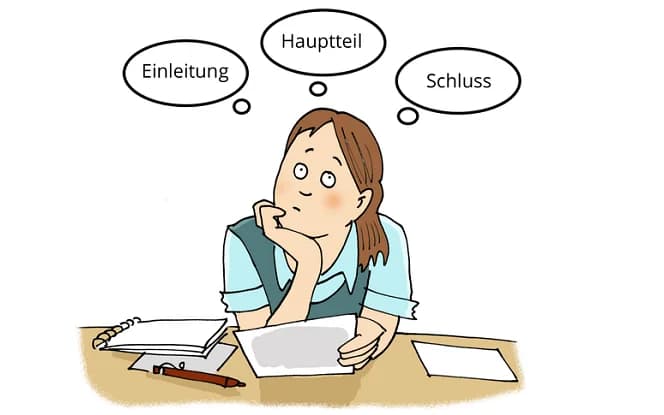
Each week, keep at least one speaking recording, one corrected piece of writing and a list of recurring mistakes. That is what tells you whether you are improving or just logging hours.
Goethe, telc or ECL
All three offer a CEFR B1 exam, but the structure and resit rules differ. Choose by what the receiving institution accepts first, then by exam dates and your strengths.
| Goethe-Zertifikat B1 | telc Deutsch B1 | ECL B1 | |
|---|---|---|---|
| Structure | Four separate modules | A written and an oral exam | Receptive and productive skill papers |
| Timing | Reading 65 min, Listening ~40, Writing 60, Speaking ~15 | Reading + Sprachbausteine 90 min, Listening ~30, Writing 30, Speaking ~15 | Per the ECL sample paper for your session |
| Resits | Single modules can be resat | Per the partial-resit rules | Per current ECL rules |
| Prep focus | Train each module separately | Watch the Sprachbausteine grammar section | Train on ECL sample papers |
Official sample papers: Goethe-Zertifikat B1, telc Deutsch B1, ECL. For telc, pick Zertifikat Deutsch / telc Deutsch B1, not B1 Schule or B1·B2 Beruf. Fees vary by venue and year, so check the test centre's notice before paying.
Five habits that stretch the timeline
Cramming. A long weekend session followed by five days off undoes most of it. Short daily sessions work better.
Grammar only. Knowing the rule without speaking or writing it never becomes a reflex.
Avoiding the weak skill. Everyone drifts to what they are good at; the weak skill is the one that fails you.
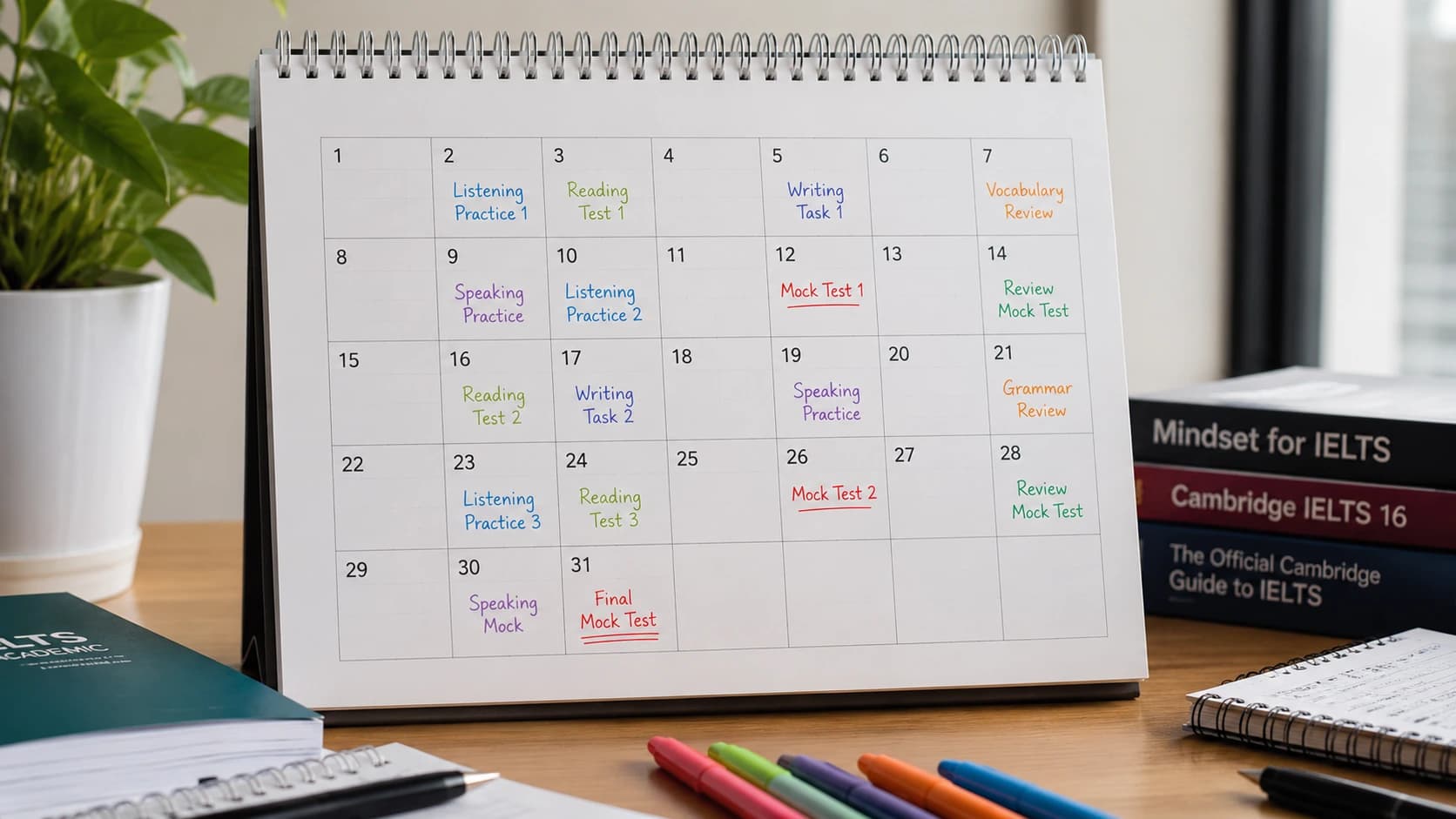
Starting mock tests too late. Meeting the format a week before the exam leaves no time to fix anything.
Memorising model answers. An unfamiliar topic leaves you stuck. Learn flexible frames, not whole texts.
When to book the exam
Don't book just because the textbook is finished or the months are up. Do at least 2–3 timed mock exams, with Speaking and Writing marked against the criteria, then decide. You can start with the Goethe and telc B1 papers in Wobridge's German practice room.

B1 and going to Germany
For a standard vocational training (Ausbildung) visa, B1 is the minimum German level the German missions in Vietnam require, and Goethe, telc and ECL are all on the list of accepted certificates. B1 alone does not get you a visa: you also need a training contract, proof of funds and other documents. Rules change, so check with the German Embassy and Make it in Germany before applying.

Some fields need more than B1. Nursing usually aims for B2 because communication with patients must be precise. Hospitality and mechanical trades depend on the employer: some accept B1, others want B2. Going from B1 to B2 typically takes another 3–6 months of intensive study.
German B1 (Goethe or telc) is also one of the qualifying certificates for the two years of work in Poland and Germany programme for Wobridge students. If you are also weighing study abroad, see studying in Germany.
Where to start
If you don't know your level, don't guess. Leave your details and Wobridge will run a placement test and set a path from where you actually are, or call 0866 868 701. Already at A2? See the German B1 course.
B1 isn't finishing the B1 textbook. It's being able to use German in all four skills.
Topics
- Study plan
- Choosing a test
- Practice