The most common listening practice is simply listening a lot: podcasts on the commute, films in the evening. That builds familiarity with rhythm and accents, but rarely closes specific gaps.
The reason: when listening for gist, the brain fills holes by inference from context — so whatever you failed to hear slips past unnoticed.
Dictation forces the gaps open
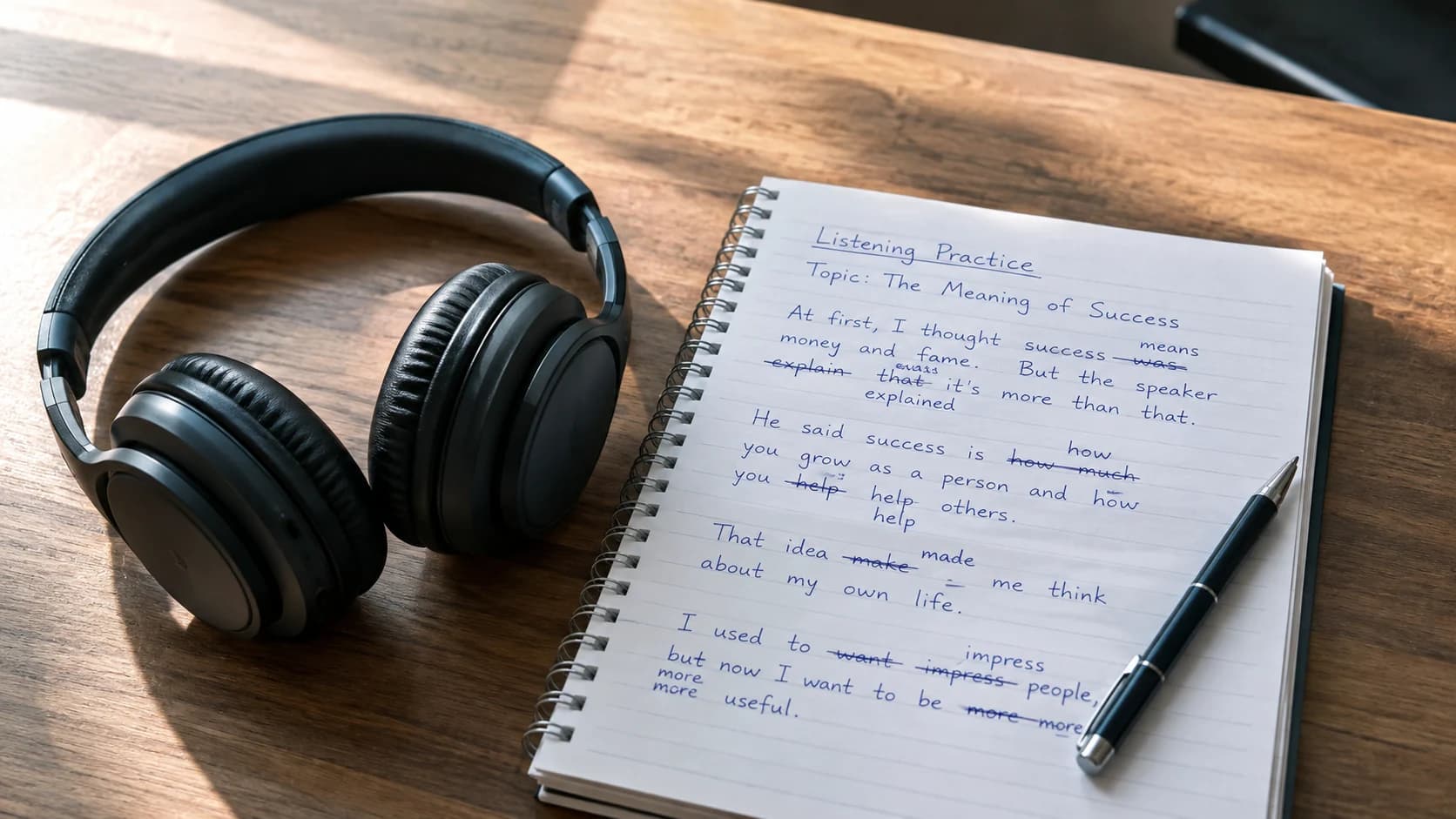
Writing every word removes inference as an option. Wherever you cannot write is where your ear genuinely failed, and it appears right there on the page.
Which is also why the exercise is uncomfortable: it shows the real figure, usually lower than it feels.
How to do it
Five steps for one clip
Pick a clip of thirty seconds to a minute that has a transcript.
Listen and write it out, pausing and rewinding as often as you like.
Stop when you cannot add anything more.
Compare against the transcript and mark every difference.
Listen again to exactly those spots, this time knowing what to hear.
The last step teaches the most: replaying a spot you just missed, now knowing the answer, trains the ear to catch that sound next time.
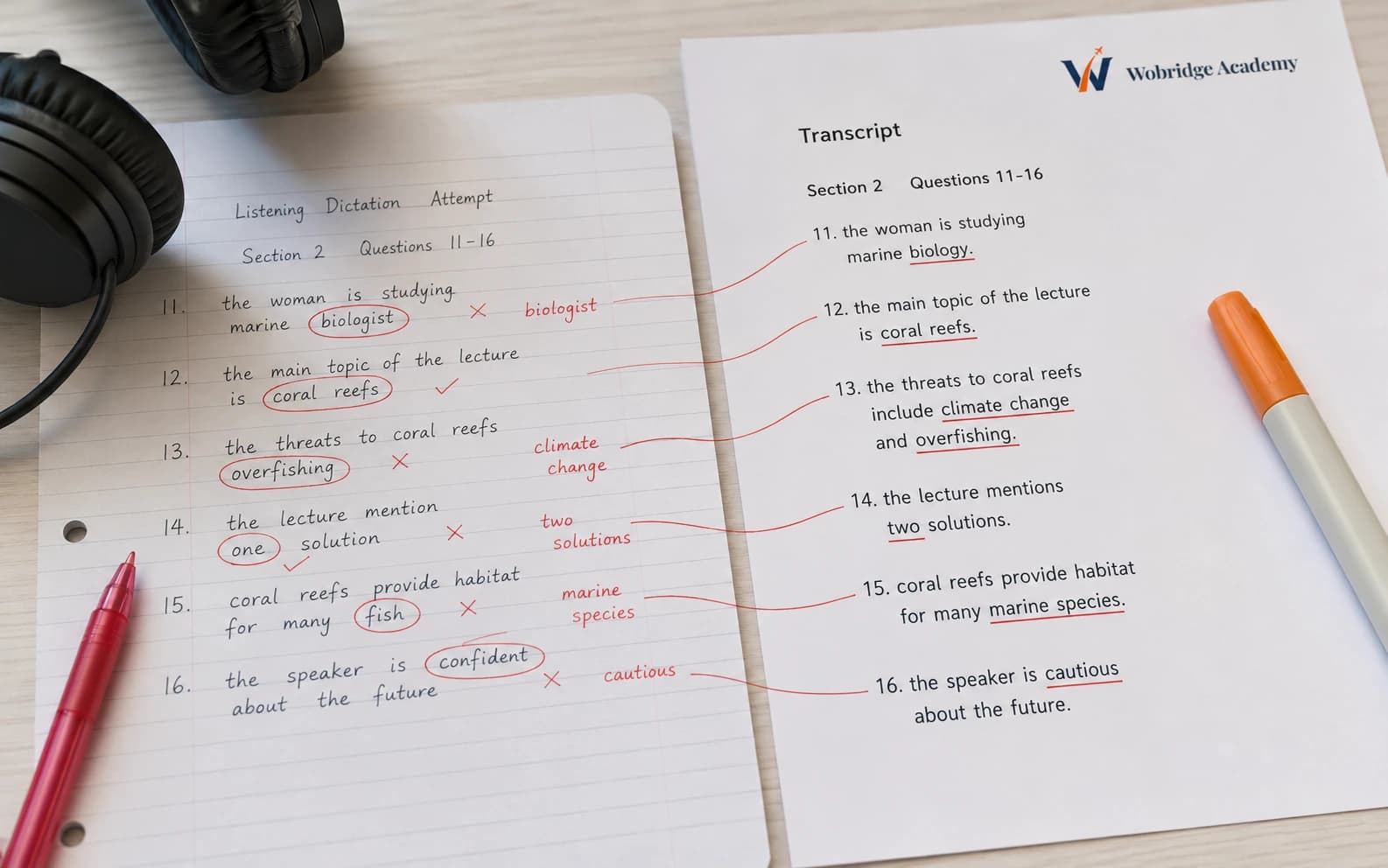
Four kinds of gap that surface
| Kind | Example |
|---|---|
| Linking | “an apple” heard as a single word |
| Elision | “next day” loses the middle consonant |
| Contractions | “should have” becoming “should've” |
| Unstressed function words | “to”, “of”, “a” nearly vanish |
The last three are not the speaker's failings but how English behaves at speed. Simply knowing they exist changes a great deal.
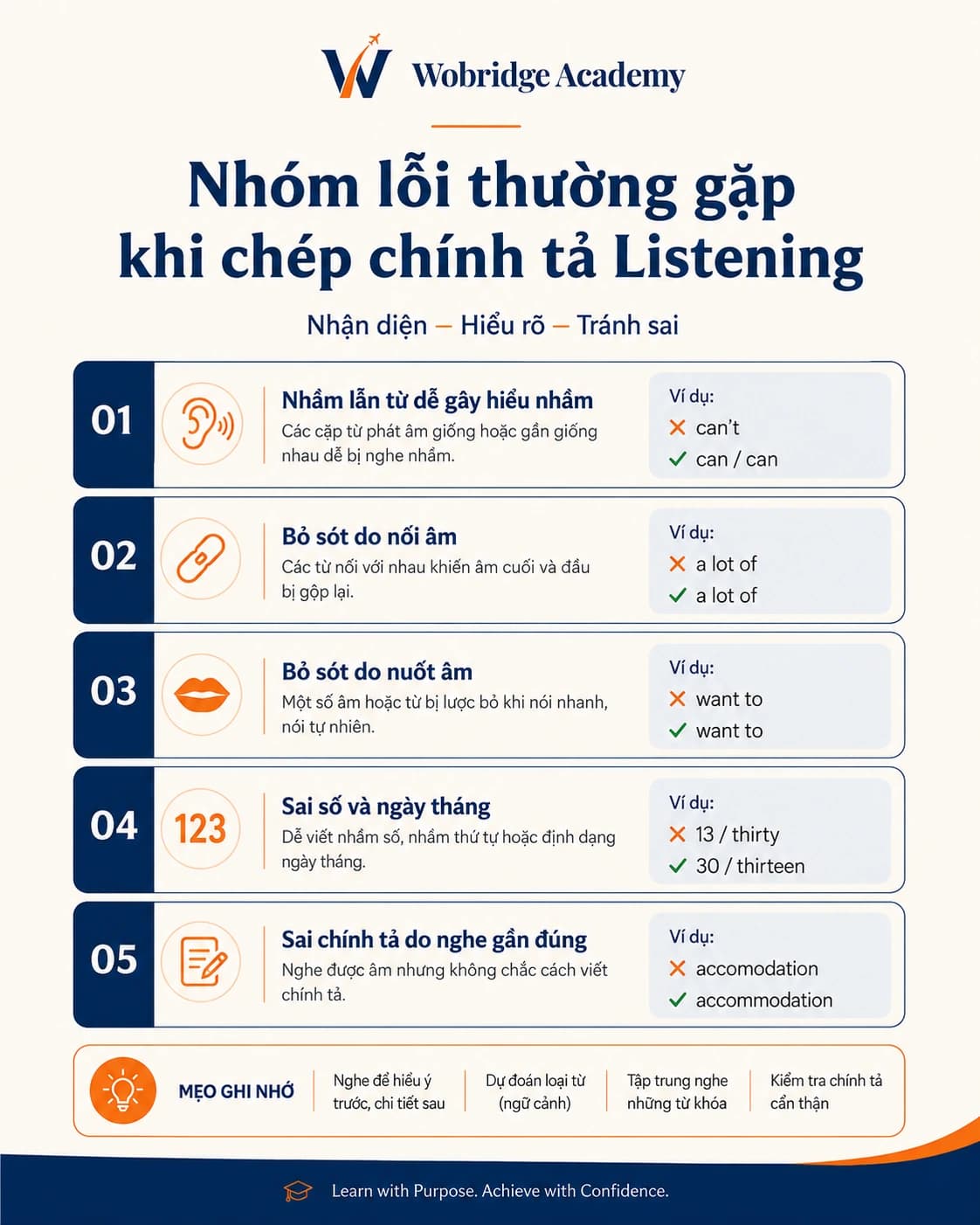
How much is enough
Fifteen minutes a day on one short clip is enough, and far more sustainable than one long weekly session. The exercise is tiring, so short stretches are what survive.
After a few weeks, the number of differences on a clip of the same difficulty is the clearest progress measure listening practice offers — clearer than the feeling that it “sounds easier now”.
Topics
- Listening
- Practice