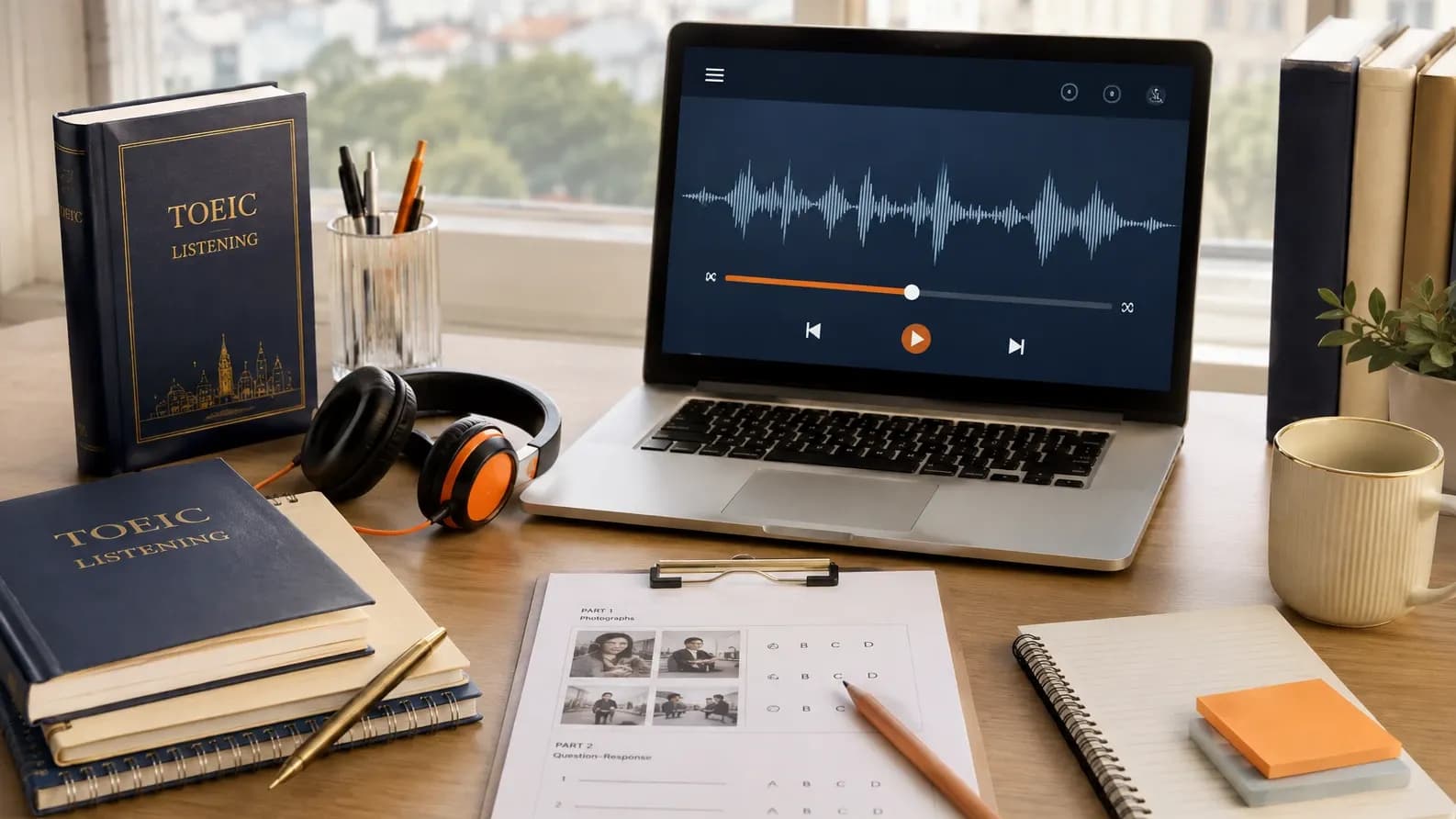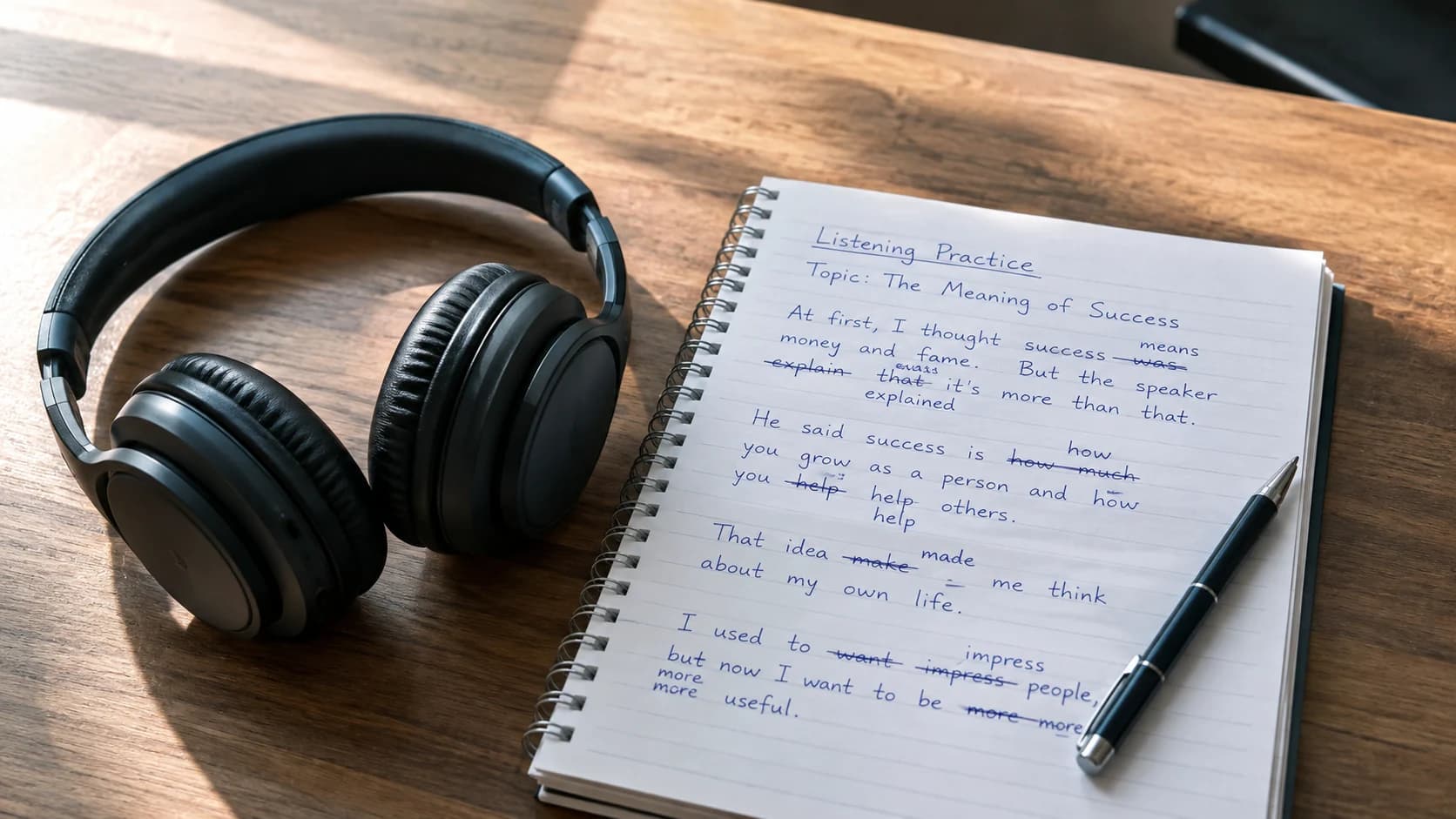
TOEIC Listening has four parts, and they do not test the same thing: photographs first, then short question-and-response, then conversations and talks.
This article lists the mistakes that recur in each group, and the practice that addresses them.
The similar-sound trap
Wrong options usually contain a word that sounds much like one just heard, or the same word in a different sense. The ear catches something familiar and the hand marks it before the mind checks.
The fix is not listening harder but changing the order: hear the whole line, then look at the options. Reading options while listening invites exactly this trap.
| On the recording | Trap option | Why it is wrong |
|---|---|---|
| “The report is due Friday.” | “He is reading a report.” | Same root word, different action |
| “Take the elevator.” | “She left the letter.” | Near-identical sounds, unrelated meaning |
| “It closes at seven.” | “Seven people came.” | Same number, different role |
In Part 2, not every prompt is a question
Many turns in the short-response part are offers, complaints or remarks — and the correct option is a reasonable reply, not an answer to a question.
For prompts opening with a question word (Where, When, Who), the old rule still holds: an option containing Yes or No is almost always wrong.

Read the questions first in the last two parts
Conversations and talks each carry three questions, and they follow the order the information appears. Skimming those three during the pause before the audio starts is the cheapest way to know what you are waiting for.
Three things to do in the pause
Read the three questions and underline each question word.
Predict the kind of information you need: a name, a figure, a reason.
Abandon the question you just answered — going back costs you the next one.
And when you miss one, let it go. The recording does not wait, so clinging to a lost question almost always takes the following one with it.
The figures here come from the test provider's published materials and may change. Requirements differ by institution — read the document issued by whoever receives your application.
Topics
- Listening
- Practice