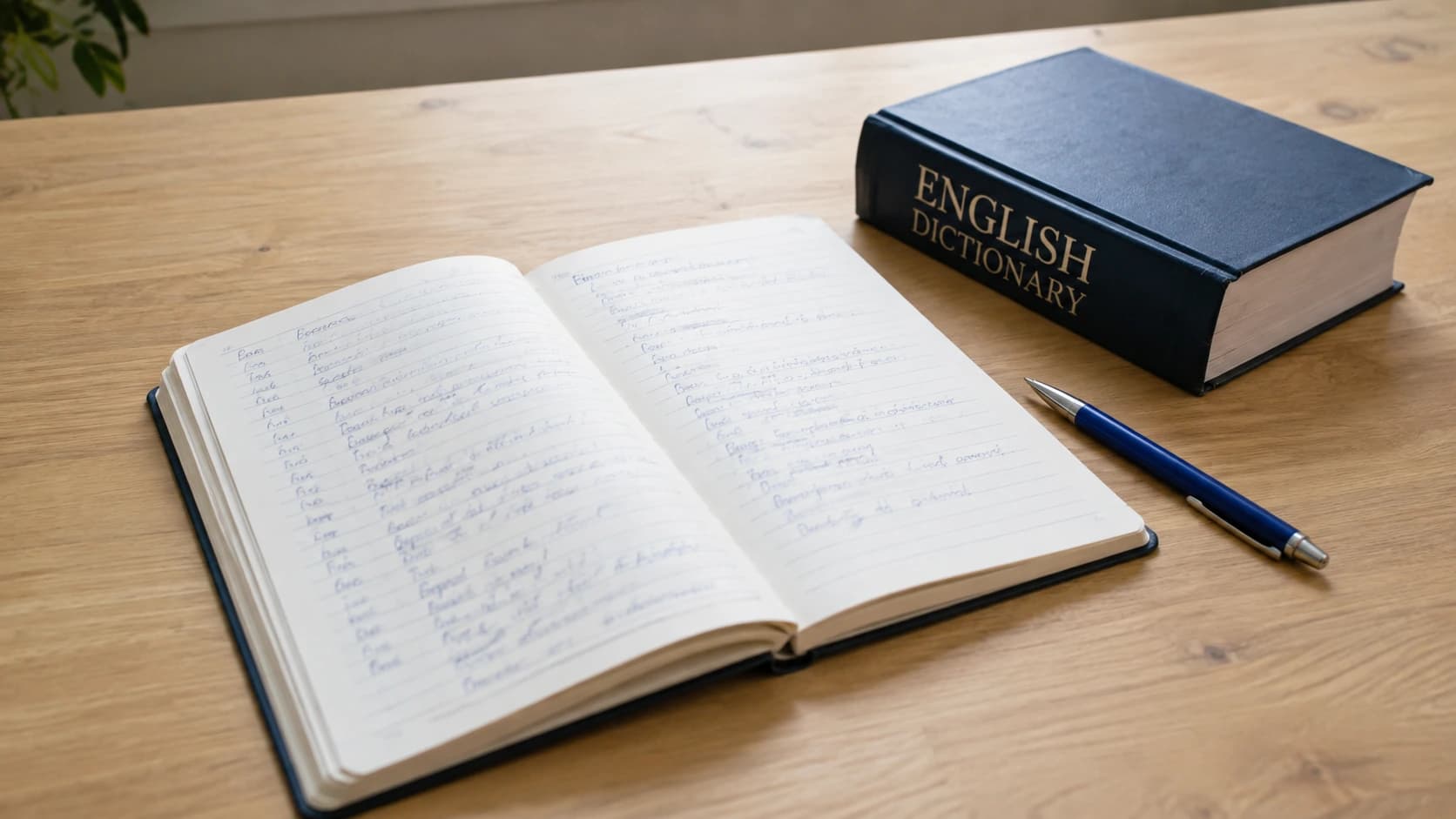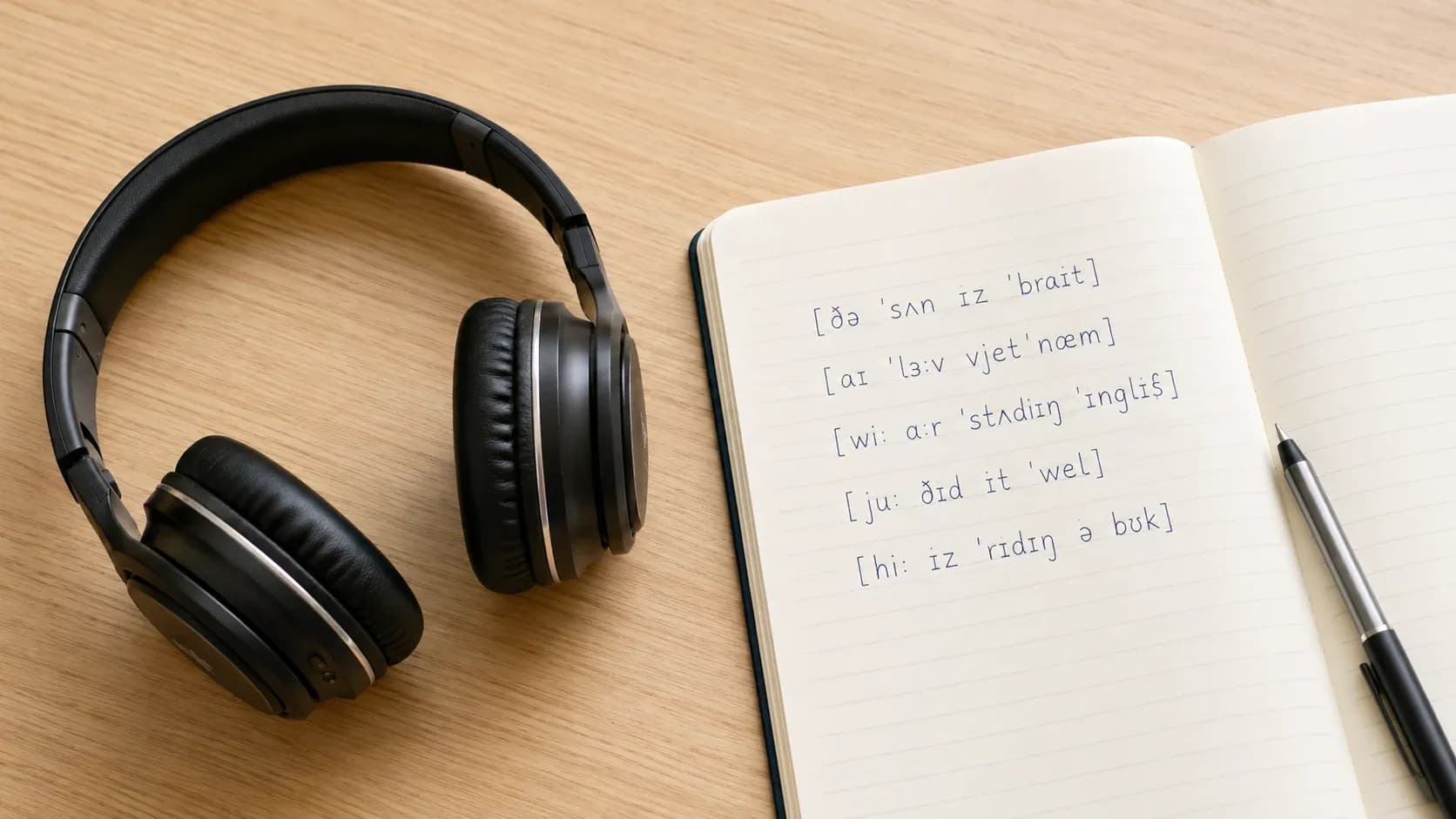
A familiar situation: you read well, you watch films without subtitles, yet in front of a foreign speaker the simplest sentence jams.
The usual conclusion is a shortage of words, and the usual remedy is to learn more. That remedy rarely works, because the diagnosis is wrong.
Vocabulary runs in two directions
The first is RECOGNITION: you meet a word in a sentence and understand it. The second is RETRIEVAL: you hold an idea and must find words for it. For most learners the second is many times smaller.
| Recognition | Retrieval | |
|---|---|---|
| Used when | Listening and reading | Speaking and writing |
| Input | The word is in front of you | Only an idea in your head |
| Practised by | Reading and listening widely | Speaking aloud, writing your own sentences |
That gap is not a defect but a direct result of how people study: reading and listening train recognition, and only speaking and writing train retrieval.
Why it is hard to notice
Looking at a word list and recognising everything feels like a solid vocabulary. That feeling measures recognition, and says nothing about the other direction.
Which is why the most common revision method — rereading the list — is both comfortable and nearly useless for speaking.
Second cause: learning isolated words
English leans on fixed phrases, and fluent speakers retrieve whole phrases rather than assembling words. Learners who store single words assemble on the spot, which costs time and produces stilted sentences.
The fix lies in the unit you record: when you meet a new word, write down the phrase it came in. The unit you retrieve while speaking is the unit you stored.
Third cause: fear of mistakes
Many learners build the whole sentence internally, check the grammar, and only then speak — a process longer than the pause a conversation allows.
The practical way out is to lower the standard for the first attempt: say the simplest sentence that carries the idea, accept that it is plain, improve it next time.
Four things that change retrieval
Record whole phrases, not isolated words.
After each new word, build one sentence about your own life.
Revise by covering the English and retrieving it.
Speak aloud for a few minutes daily, unprepared, without stopping to correct.
The useful measure is not the number of words in your notebook but the number you can use while speaking without stopping to think. That figure is always lower than it feels, which is exactly why it is worth using.
Topics
- Speaking
- Vocabulary