Pronunciation is often given the wrong target. Many learners work toward sounding native, when what they actually need is to be understood first time without being asked to repeat.
Those two targets lead to different practice, and the practice for the second is far shorter.
Stress matters more than individual sounds
English identifies words largely by rhythm: which syllable is stressed. Every consonant can be right, but if the stress lands wrong the listener still has to stop and guess.
Conversely, an imperfect sound with correct stress is almost always understood.
| Word | Misplaced stress | Result |
|---|---|---|
| record | Wrong syllable | The noun becomes the verb |
| present | Wrong syllable | The gift becomes the act of presenting |
| photograph | Stressed like photographer | The listener asks you to repeat |
Three sounds that cause real confusion
Not every inaccurate sound has consequences. Only pairs that distinguish two real words are worth your time.
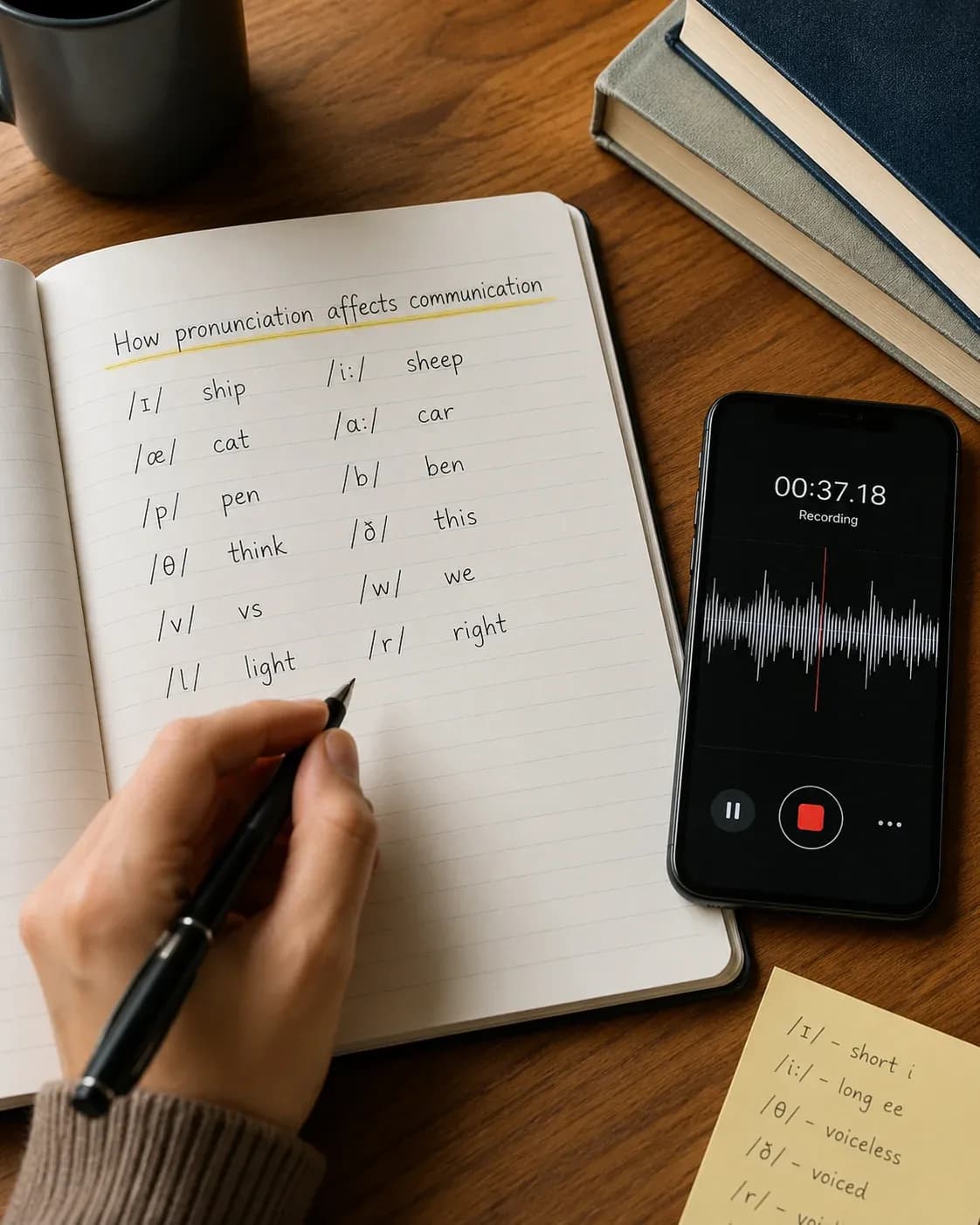
Three groups to prioritise
Dropped final consonants — “card” becoming “car”, “worked” becoming “work”.
Long and short vowels — “ship” and “sheep”, “full” and “fool”.
Consonant clusters — “strength”, “asked”, “texts”.
Short practice that works
Record yourself reading a short passage, then listen back. Most of a person's pronunciation errors repeat, and two minutes of playback usually finds them faster than a lesson.
Then pick exactly ONE to fix this week. Working on four at once changes none of them, because nobody can monitor four things while speaking.
Intonation comes last
Once stress and the confusable sounds are settled, what remains is intonation — rising on questions, falling on statements, stressing the word carrying new information.
This one is learned by imitation: hear a sentence, repeat it immediately, match both the rhythm and the rise and fall. It needs no phonetic chart.
Topics
- Pronunciation
- Speaking