TOEIC is built to measure English used at work. Its material is emails, internal notices, advertisements and meeting schedules — not research papers or essays.
That is why "should I take TOEIC or IELTS" has no general answer. It depends on whoever will receive your result.
Two tests, two different things
The most common TOEIC paper is Listening and Reading: 200 multiple-choice questions, about two hours, scored from 10 to 990. Speaking and Writing form a separate test with a separate registration, and many employers do not ask for it.
| TOEIC Listening & Reading | IELTS Academic | |
|---|---|---|
| Context | Workplace, office | Academic, university |
| Question type | Entirely multiple choice | Handwritten and spoken |
| Scale | 10 – 990 | Band 0 – 9 |
| Skills measured | Listening and reading | All four skills |
Who TOEIC suits
Three cases where TOEIC is the right choice
The organisation receiving your application names TOEIC and a specific score.
You need a certificate quickly and only have to demonstrate listening and reading.
Your job uses English mainly through email and documents rather than presentations or essays.
If your destination is a degree programme abroad or an immigration file, read that institution's own requirements first — most of them do not accept TOEIC.
Two halves that need different practice
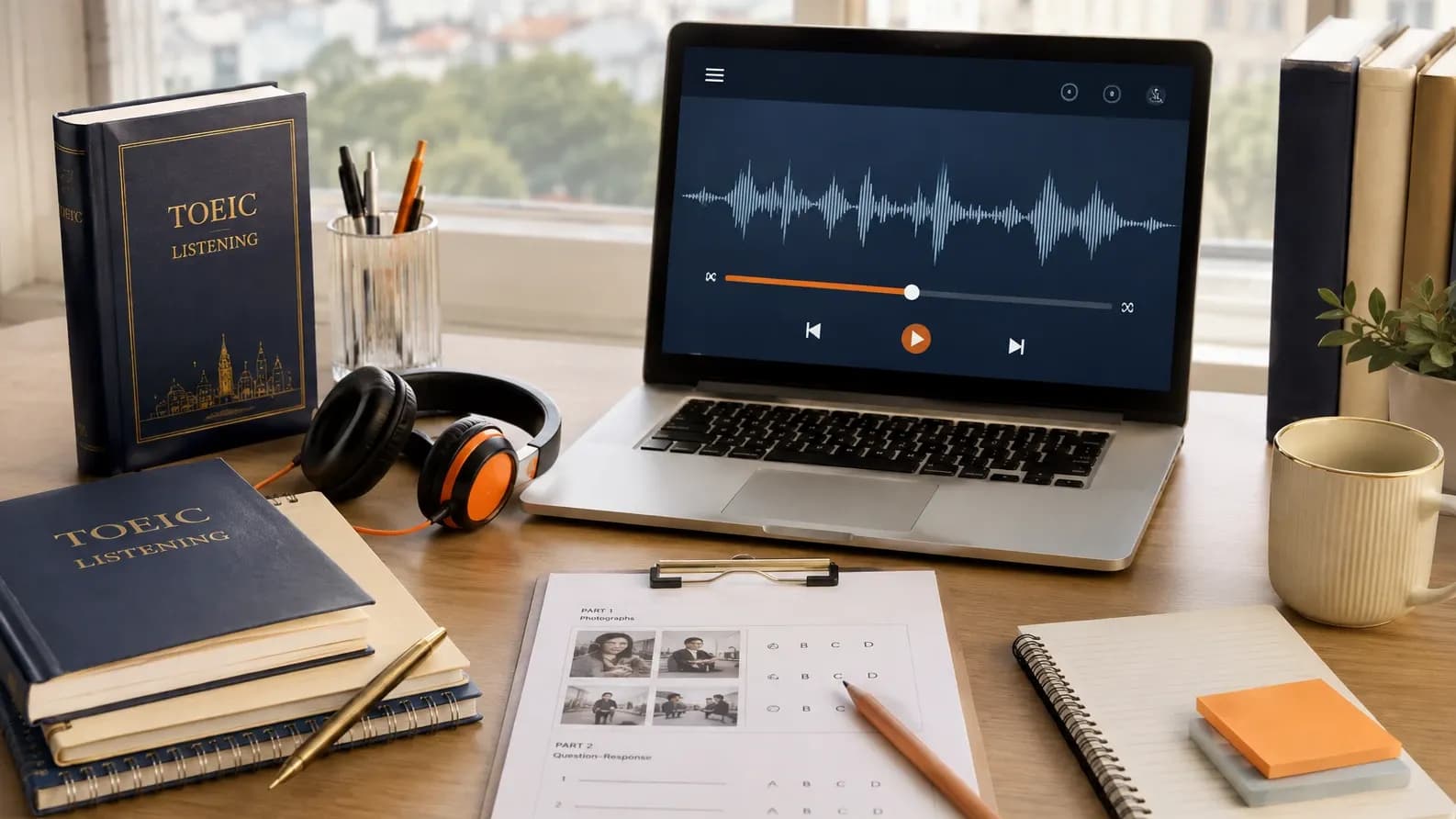
Listening leans on short conversations and announcements at natural speed with varied accents. Reading leans on workplace vocabulary and sentence structure, including a format that asks you to read two related texts and connect information across them.
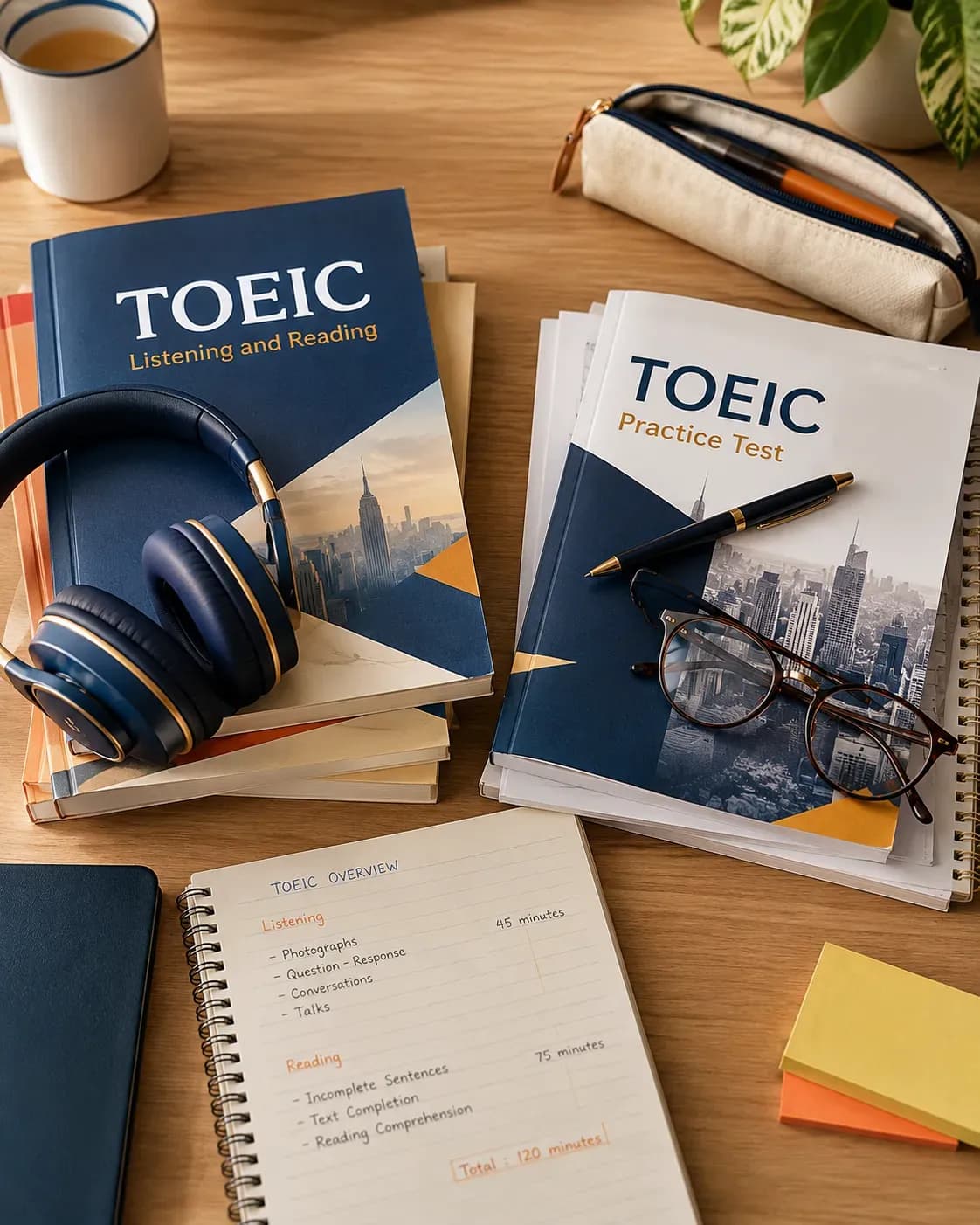
Practising both halves the same way is the most common route to losing marks on the weaker one: office vocabulary helps your Reading but will not help you keep up with a fast spoken exchange.
Requirements differ by organisation and change from year to year. Before choosing a test, read the document issued by whoever will receive your application.
Topics
- Overview
- Choosing a test