
The SAT is a standardised test many US universities use in admissions. It has two main sections: Reading and Writing, and Maths.
The most common misconception: the SAT does not measure English proficiency for foreign-language learners. It assumes you already study other subjects in English and measures reasoning on that basis.
Two sections, two abilities
| Section | What it measures |
|---|---|
| Reading and Writing | Comprehension, inference from text, grammar in context |
| Maths | Algebra, data analysis, some geometry and advanced maths |
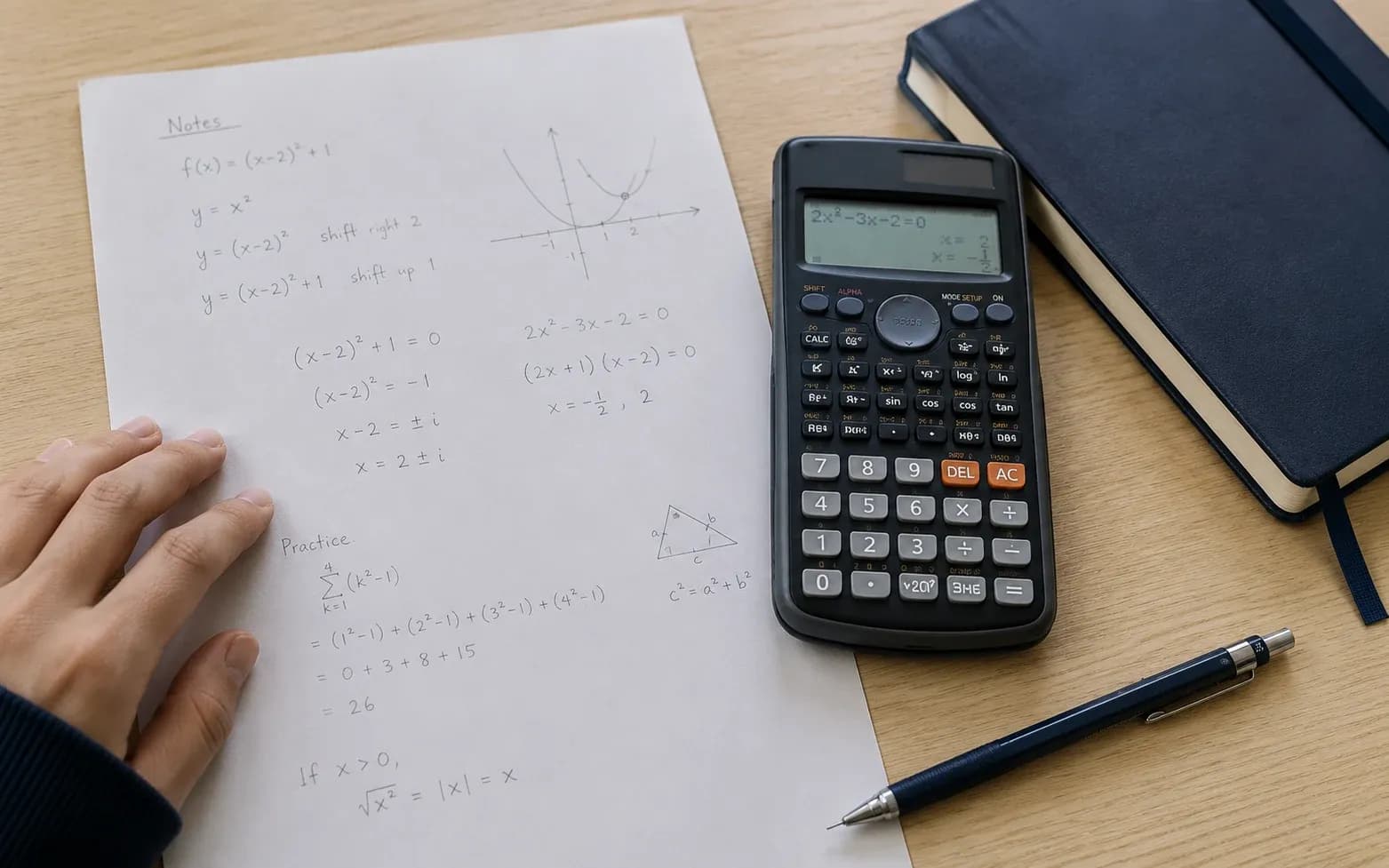
The maths does not go beyond a secondary curriculum, but the questions are in English — so a strong maths student can still lose marks to slow reading.
What Reading and Writing asks
Reading questions here are usually short: a small passage with a single question. They ask about the main idea, the role a sentence plays, or which evidence supports a conclusion.
The grammar part does not ask you to name rules; it offers four versions of one sentence and asks for the correct, natural one. Memorising tense names does not help here. Reading widely does.
Who should look into it
Three groups worth considering the SAT
Students preparing applications to US universities, or others that accept the SAT.
Anyone needing a standardised score for a scholarship that asks for one.
Students in international programmes wanting an external benchmark.
If instead you need to prove English proficiency for a degree programme or an immigration file, the SAT is not what they ask for — IELTS or TOEFL is.
Many universities have also moved to test-optional policies. So the first question is always to read the requirements of your target institution, for the year you apply.
The figures here come from the test provider's published materials and may change. Requirements differ by institution — read the document issued by whoever receives your application.
Topics
- Overview
- Choosing a test