SAT Reading and Writing asks through short passages, one question each. There are no long passages carrying several questions as in IELTS or TOEFL.
That structure changes the approach: you do not need a map of the whole text, you need to read each small passage quickly and precisely.
Read the question first, always
Because each passage serves exactly one question, knowing the question decides how you read — for the main idea, for a detail, or for the relation between two sentences.
Reading the passage first and the question second means reading the passage twice, and at this pace there is no room for a spare pass.
Four groups of question
| Group | What to do |
|---|---|
| Main idea | Restate the passage in one sentence of your own, then find the closest option |
| Function of a sentence | Ask what it does: gives an example, objects, shifts topic |
| Word in context | Cover the options, supply your own word, then look |
| Grammar | Read it aloud in your head — wrong options usually stumble |
A trick for words in context
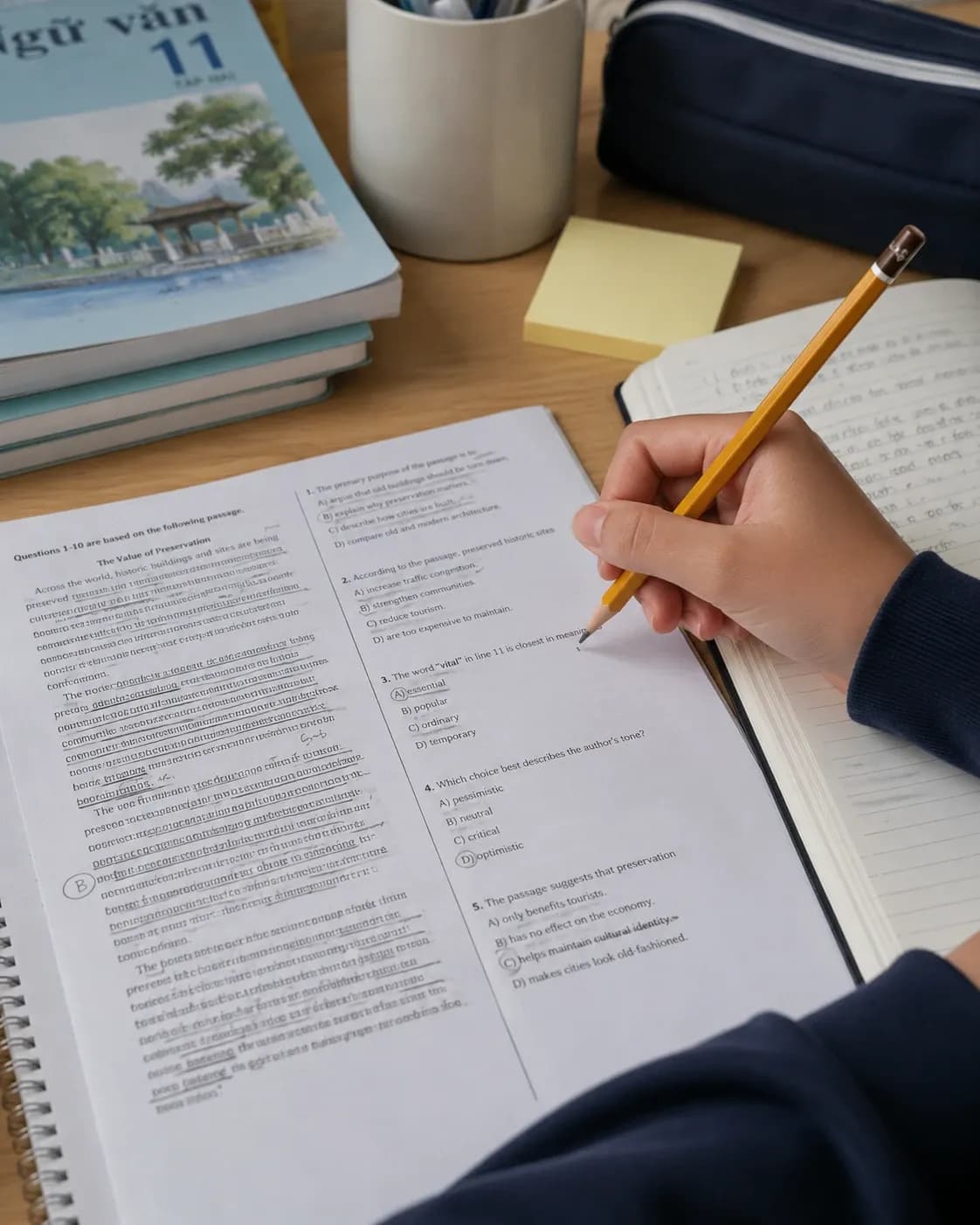
Cover the four options and think of your own word for the blank. Only then look, and pick whichever option is closest to what you thought of.
Doing it the other way — reading the four options first — makes all four sound plausible, because they were written to do exactly that.
Managing the clock
Three rules about time
No question deserves more than a minute; past that, mark it and move on.
Answer everything, including guesses — there is no penalty for a wrong answer.
Spend the last few minutes on marked questions, not on rechecking confident ones.
The third rule is often inverted, and rechecking confident answers usually converts a right one into a wrong one.
The figures here come from the test provider's published materials and may change. Requirements differ by institution — read the document issued by whoever receives your application.
Topics
- Reading
- Writing
- Academic English