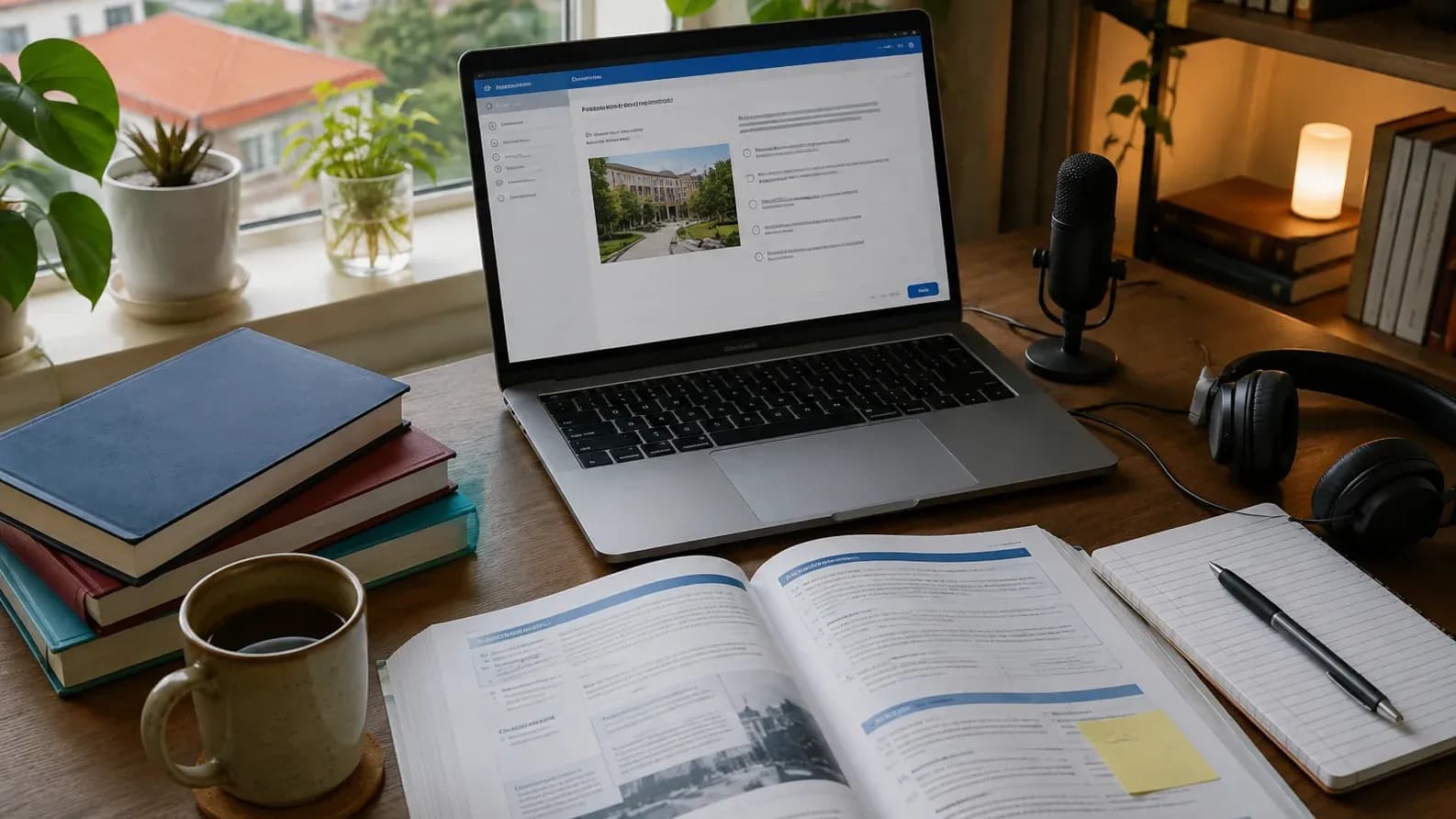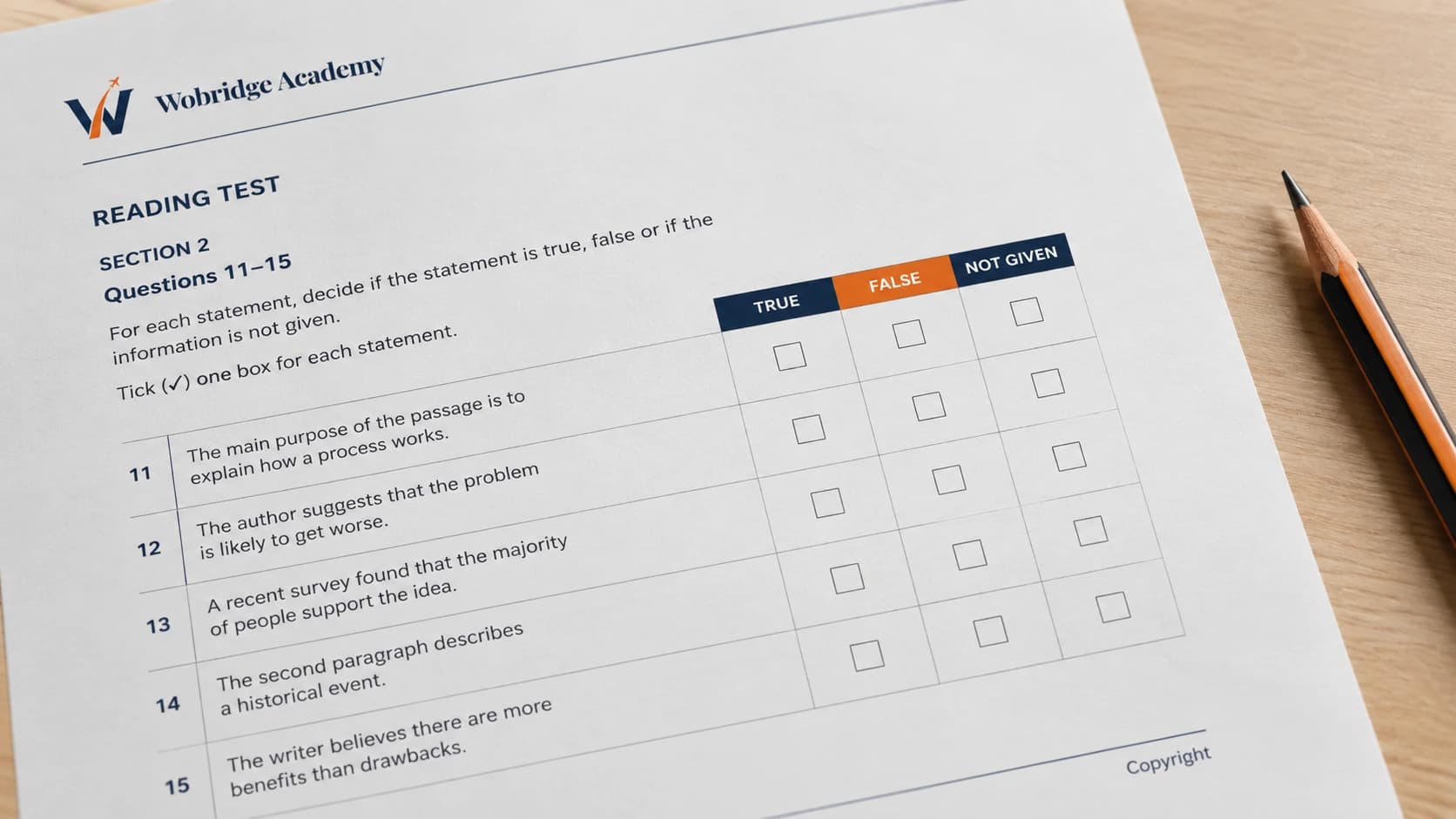
TOEFL passages come from many fields: biology, history, astronomy, economics. Nobody knows the topic in advance, and the test does not require background knowledge.
What it does require is reading the argument's shape: which sentence is the claim, which is the example, which is the objection.
Read for structure, not for detail
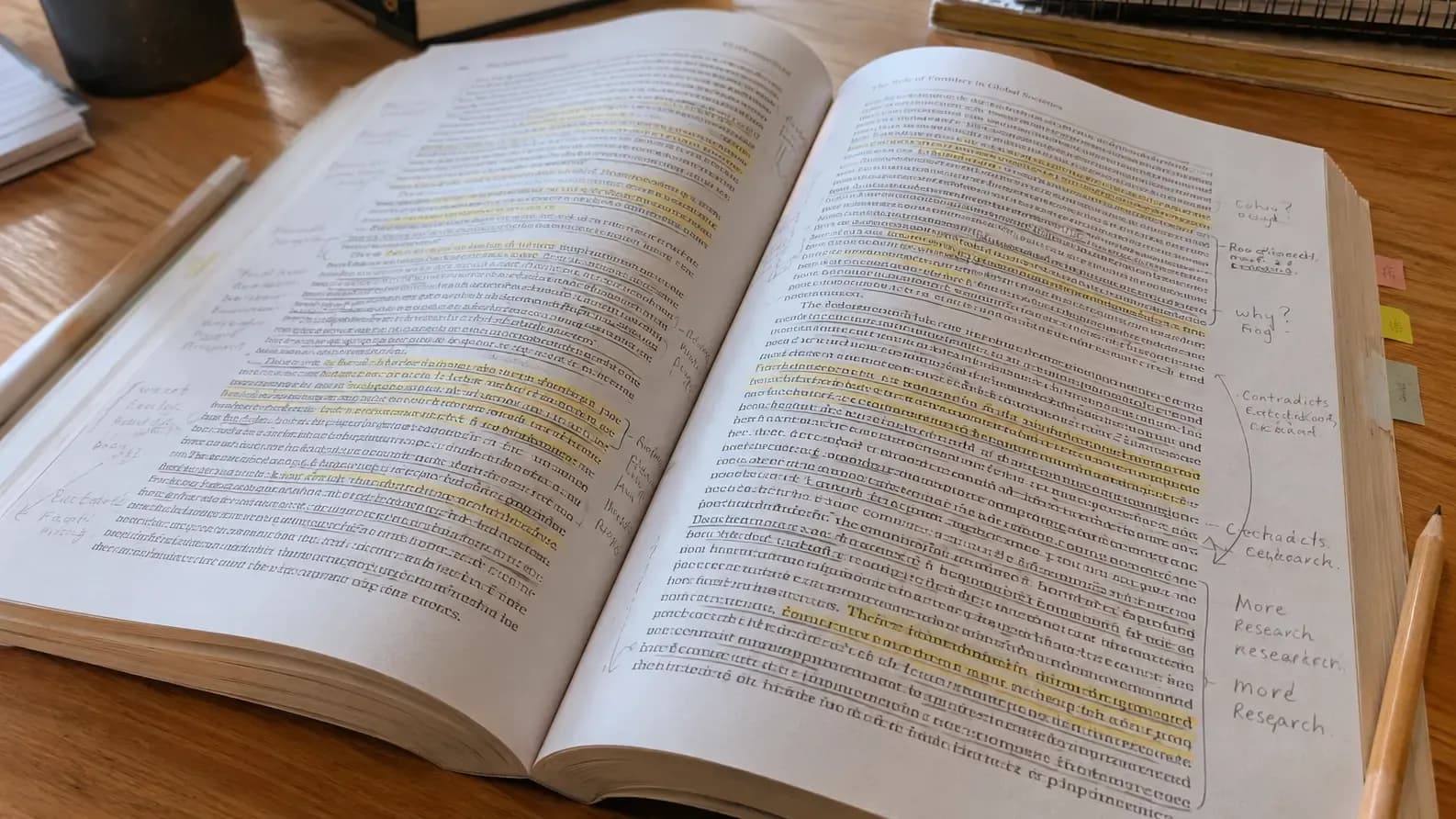
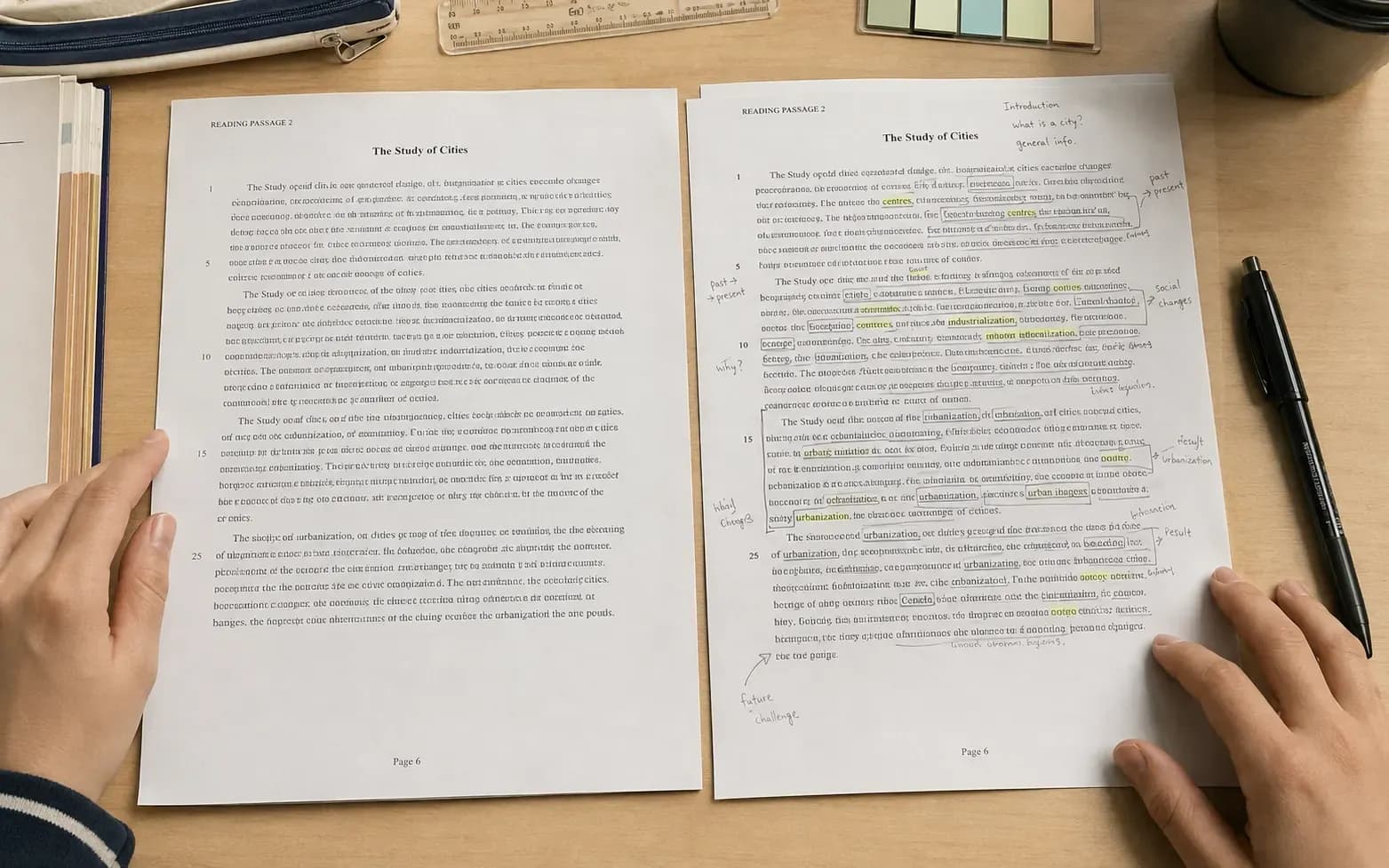
The first pass should be quick and aim at one thing: what each paragraph is about. Three or four words per paragraph is enough, and they will send you back to the right place when you answer.
Details belong to the answering stage. Trying to hold them all on the first pass is both slow and useless.
| Question type | Where to look |
|---|---|
| Main idea of a paragraph | The first and last sentences |
| Specific detail | Return to that paragraph and read two sentences closely |
| Vocabulary in context | The sentence containing the word, plus the one before |
| Inference | The relation between two sentences, not one |
Academic vocabulary is not subject vocabulary
Most hard words in these passages are not technical terms but general academic ones: “consequently”, “albeit”, “derive”, “constitute”. They appear across every field and are worth learning first.
Technical terms are usually explained by the passage itself, or simply not asked about. Skipping them on the first pass is the right call.
A daily drill
Four steps for one passage
Read quickly, noting a short phrase per paragraph.
Answer the questions, returning only to the relevant part for each.
Mark it, and for every wrong answer point at the SENTENCE that produces the right one.
Log which question type you missed — after a few papers one type will stand out.
Step three is the only one that teaches anything. Marking and then reading the answer key without finding the sentence leaves you missing the same type next time.
The figures here come from the test provider's published materials and may change. Requirements differ by institution — read the document issued by whoever receives your application.
Topics
- Reading
- Academic English