IELTS Academic measures four skills through four separate papers, but three of them run consecutively in a single sitting. That matters more than it looks: stamina across two and a half hours is part of the test, even though nobody names it as such.
This article describes that framework — timings, question counts, scoring — so you can tell which part each practice session is preparing you for.
The four skills and the order of testing
Listening, Reading and Writing follow one another in that exact order, with no break in between. Speaking is a face-to-face interview with an examiner and may fall on the same day or up to a week apart from the other three.
| Skill | Time | Questions / parts |
|---|---|---|
| Listening | about 30 minutes | 40 questions, 4 sections |
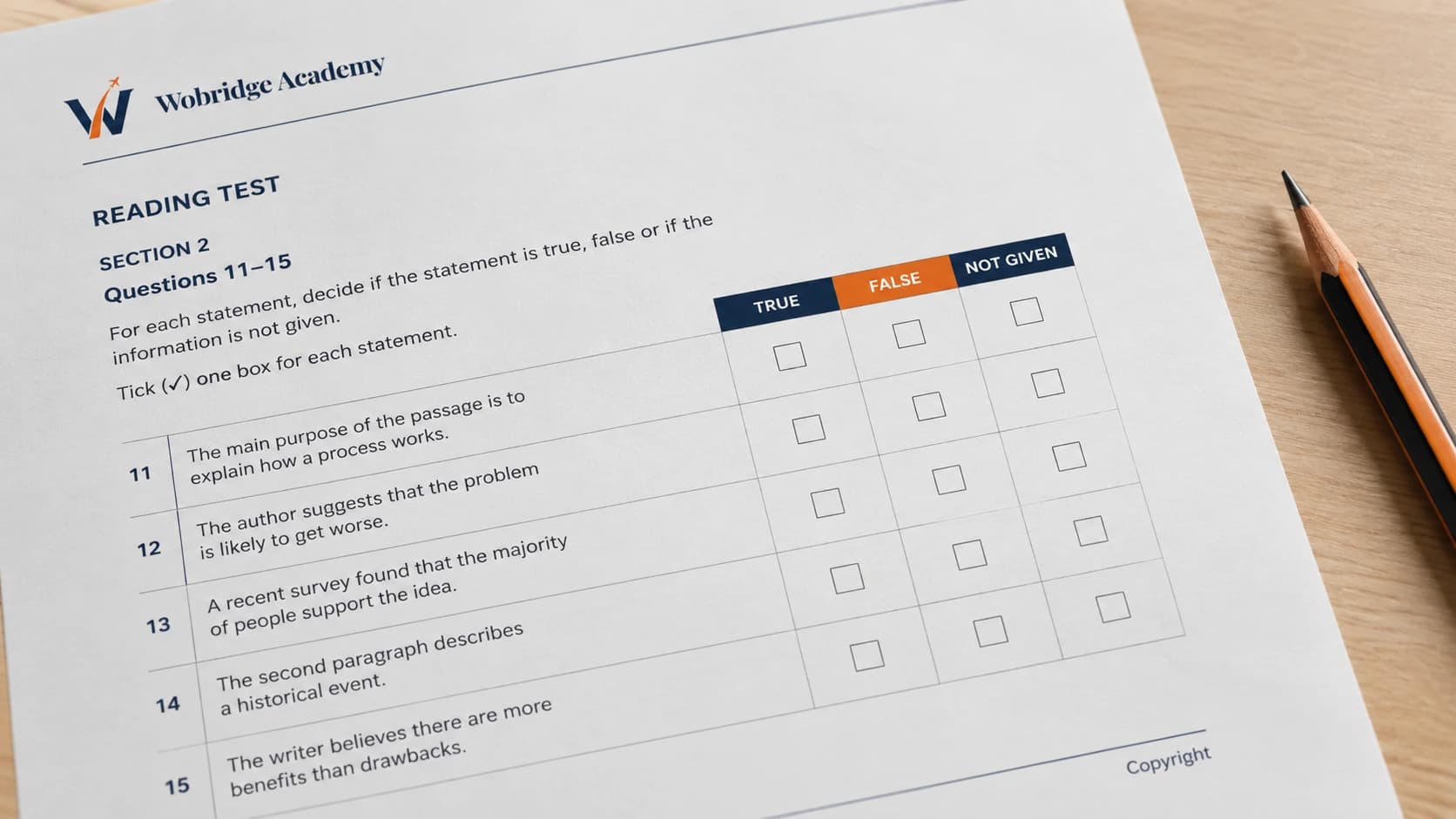
| Reading | 60 minutes | 40 questions, 3 passages |
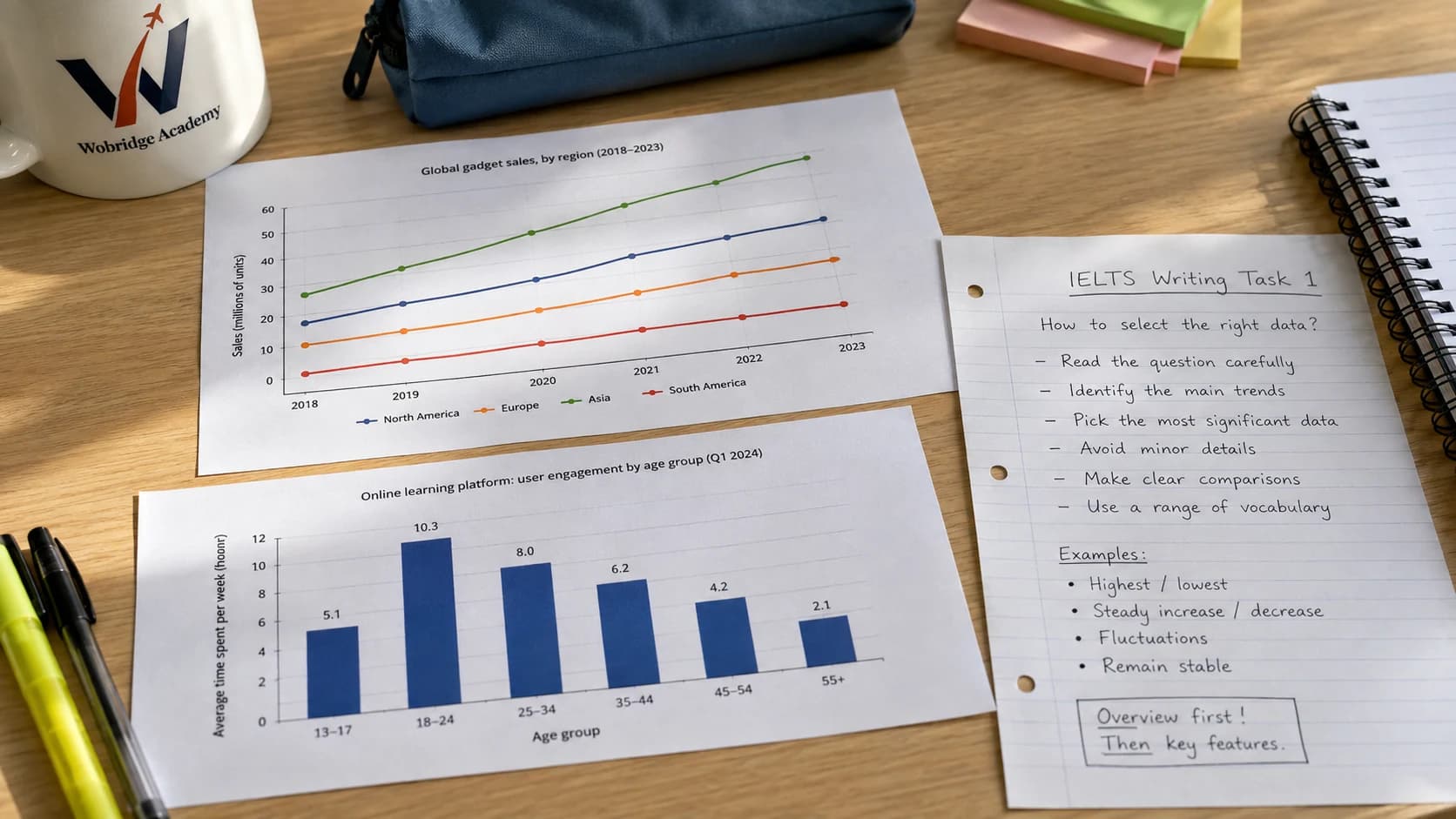
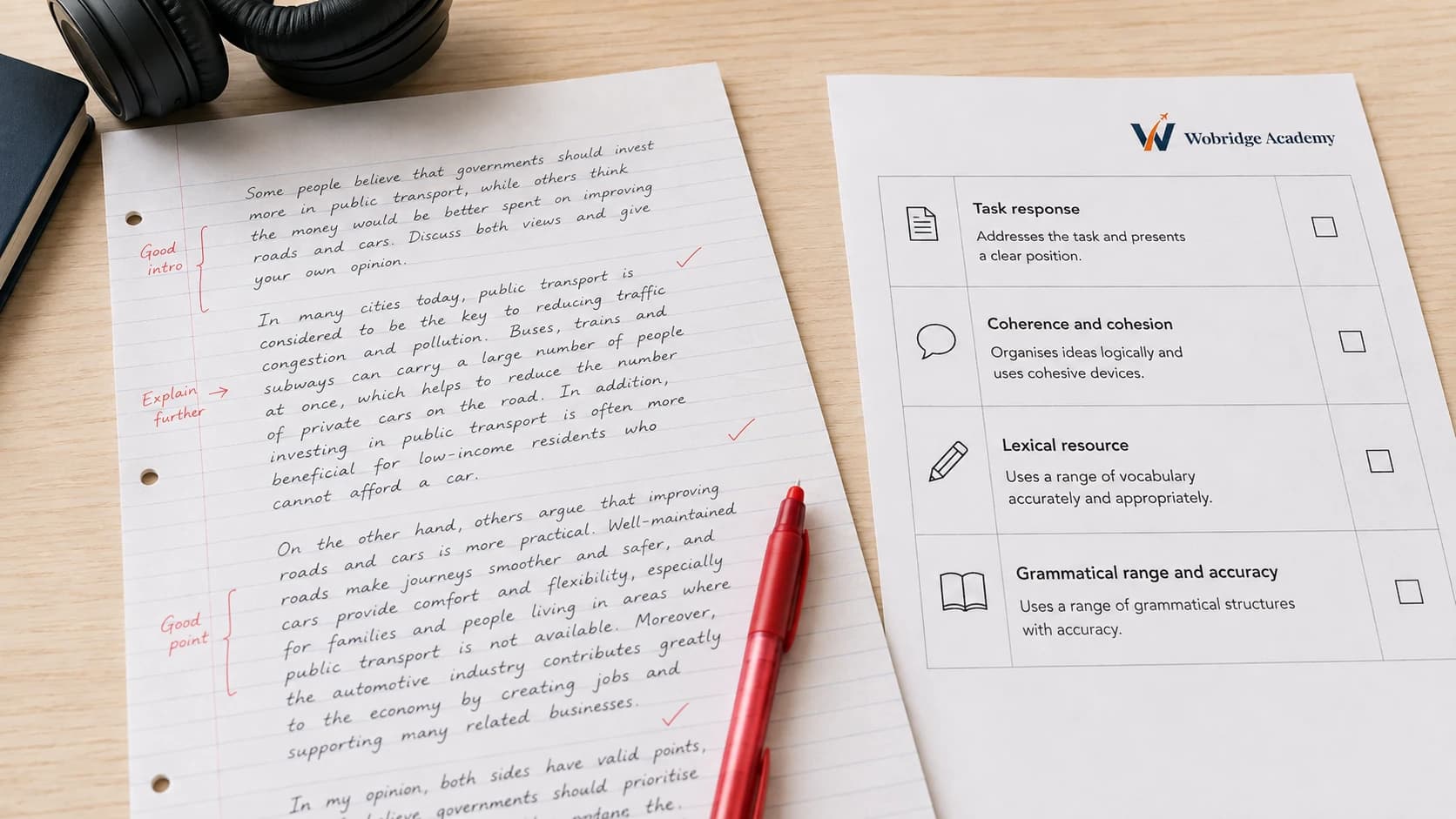
| Writing | 60 minutes | 2 tasks (Task 1 and Task 2) |
| Speaking | 11–14 minutes | 3 parts |
The band scale and how rounding works
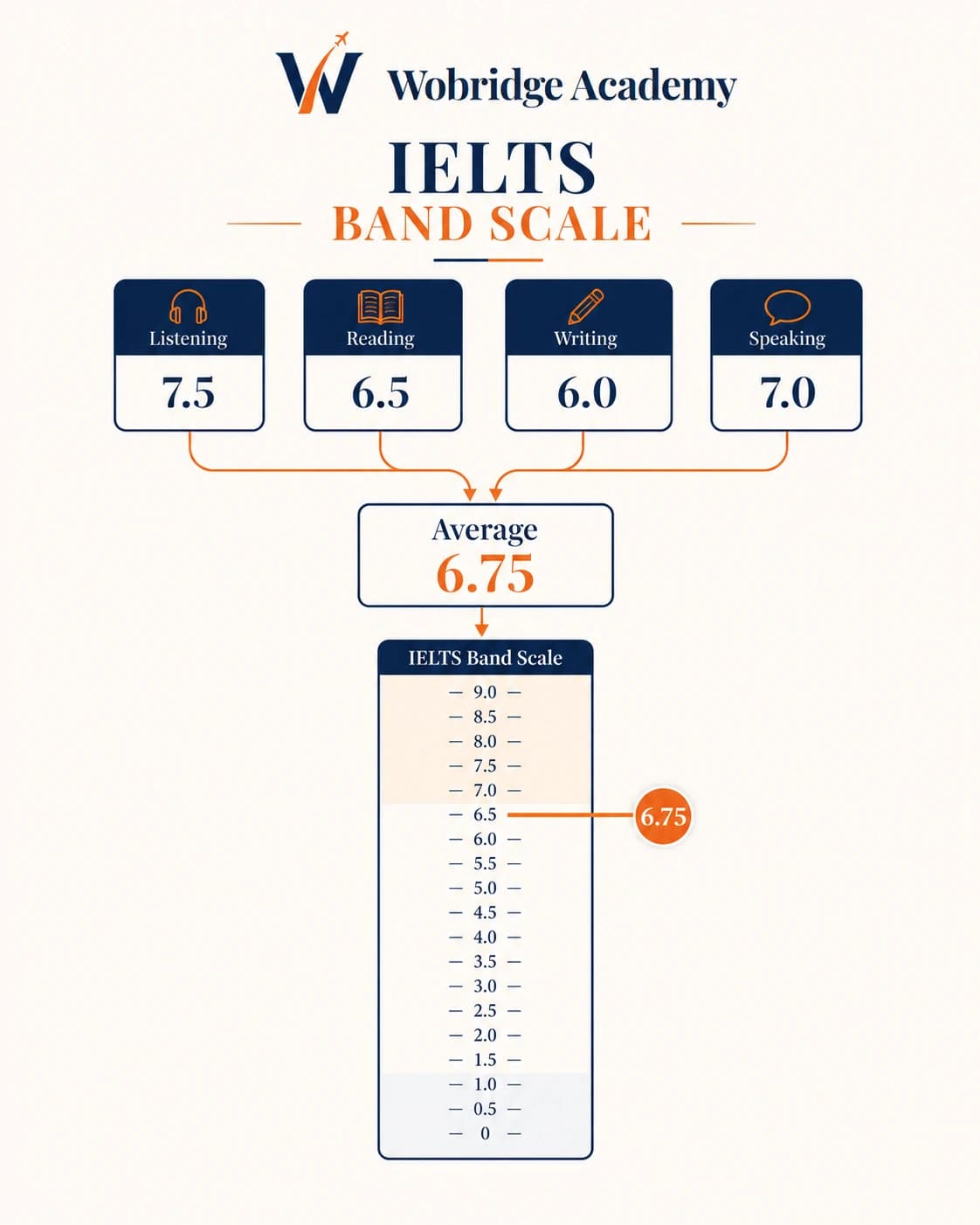
Each skill receives a band from 0 to 9 in half-band steps. The overall band is the mean of those four, rounded by its own rule: a remainder of .25 goes up to .5, and .75 goes up to the next whole band.
What the rounding rule implies
An average of 6.125 rounds down to 6.0, while 6.25 rounds up to 6.5 — half a band in one skill can move the overall result.
Lifting your weakest skill by half a band is usually cheaper than pushing your strongest one, because all four carry equal weight.
Institutions often set both an overall band and a per-skill minimum — read both figures before you apply.
Paper-based and computer-based sittings
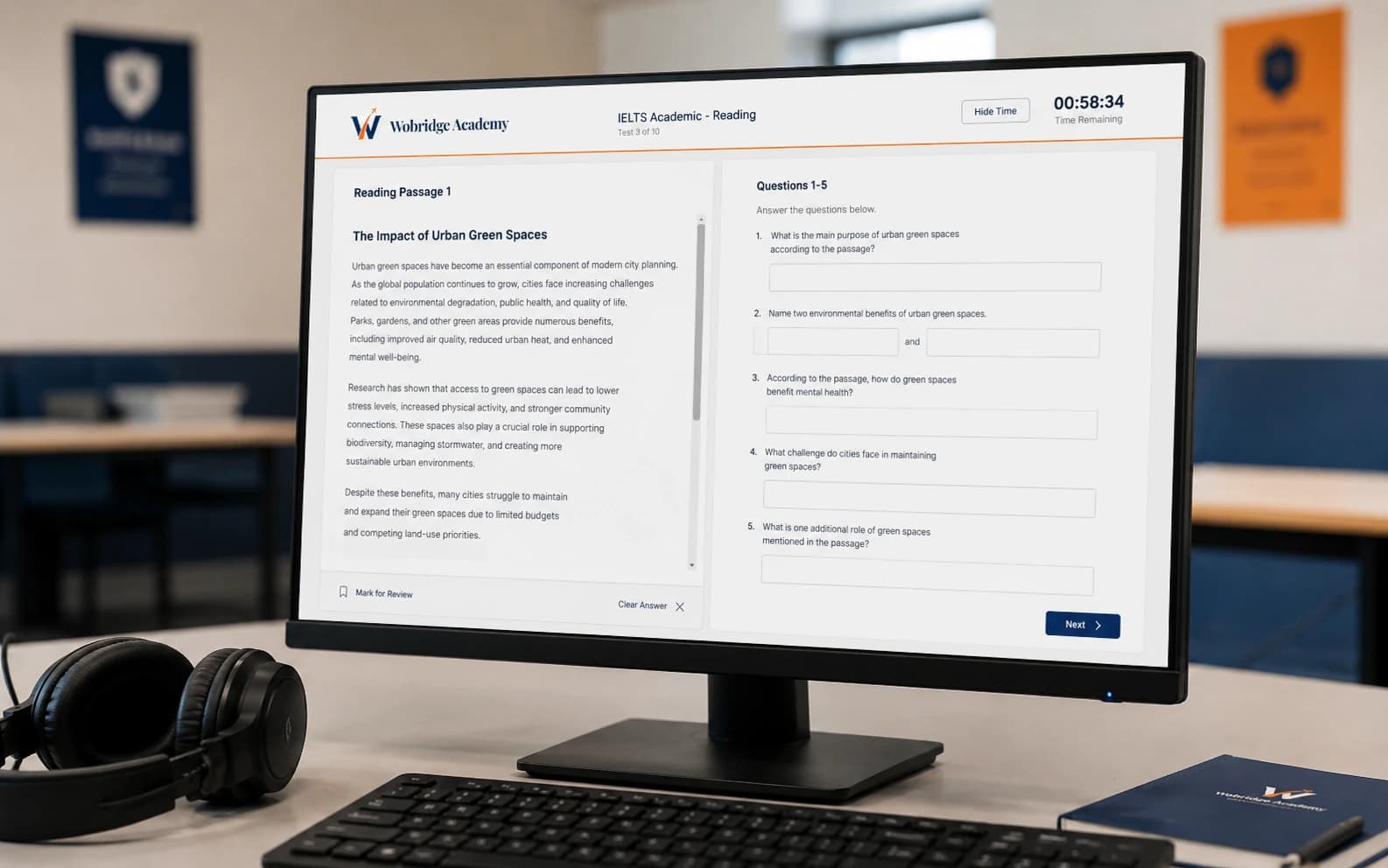
Both formats share the same papers, the same band scale and the same marking. The difference is mechanical: the computer version counts your words automatically in Writing and lets you edit quickly, but you cannot underline the question paper the way you can on paper.
In Listening, the paper version gives you ten minutes at the end to copy answers onto the answer sheet; the computer version has no such window because you type directly. Anyone used to reviewing during those ten minutes should know this in advance.
How to use this framework
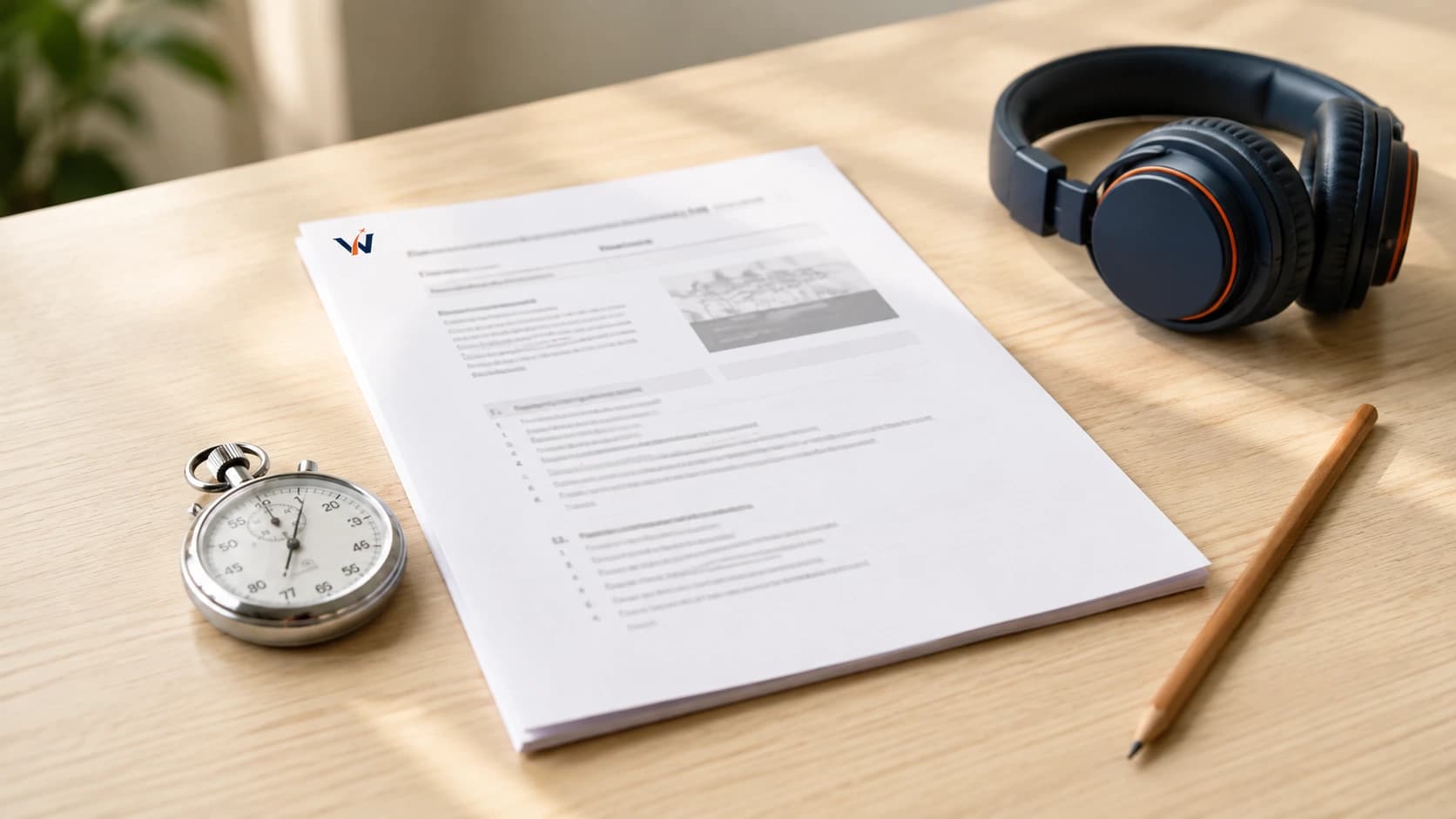
Before drilling past papers, sit one full mock under the timings in the table above. The point of that session is not to judge your level but to find which skill is trailing the other three.
From there, most of your study time belongs to the weakest skill — because all four bands carry equal weight, and because the rounding rule makes half a band in that spot worth more than half a band elsewhere.
The figures in this article come from the test provider's published materials. Regulations can change, so check the latest announcement before you register.
Topics
- Overview
- Choosing a test