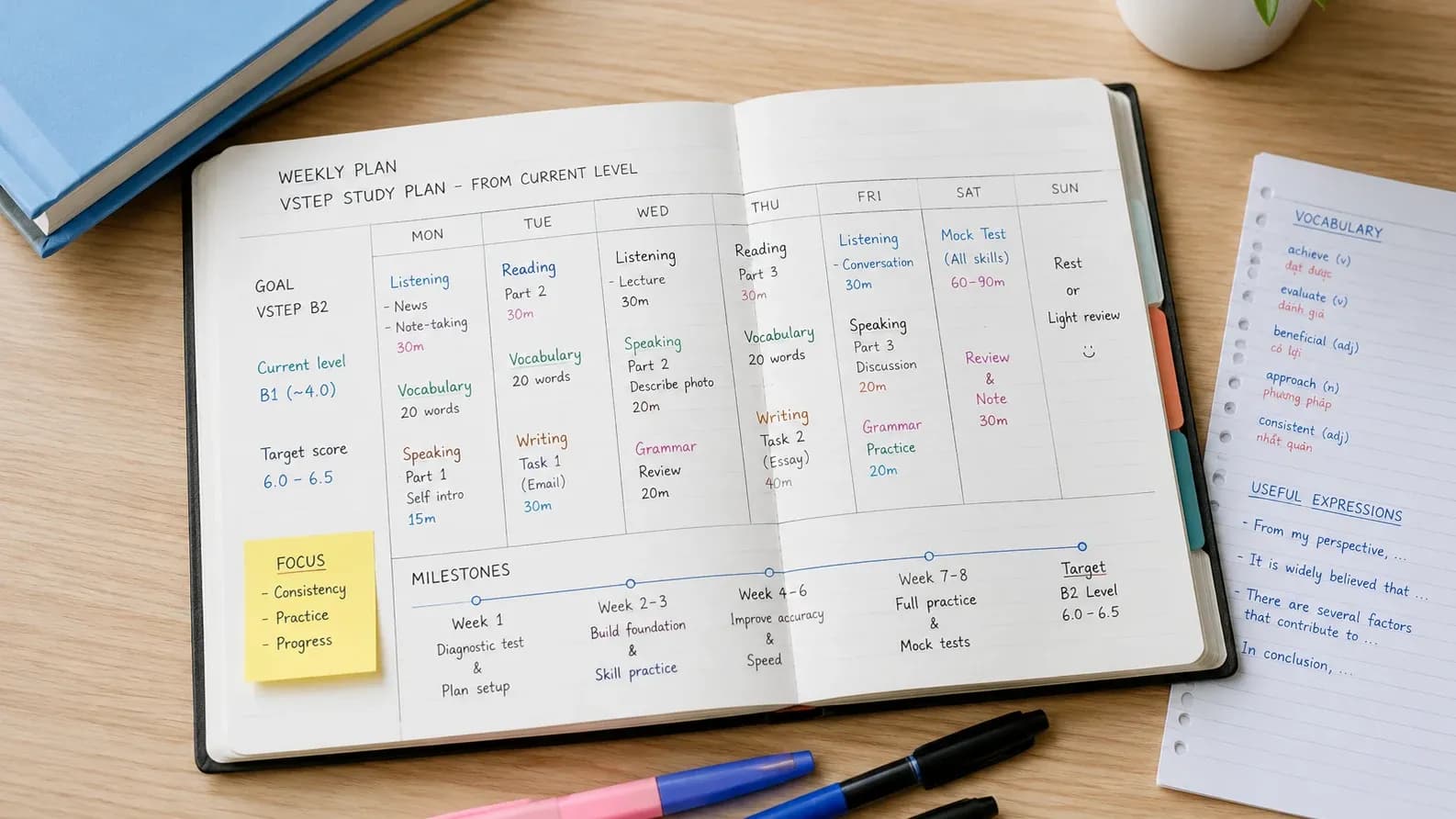
VSTEP assesses English against a six-level framework used in Vietnam, covering listening, reading, writing and speaking.
This article describes the format and answers the practical question: when to choose it over an international test.
Format
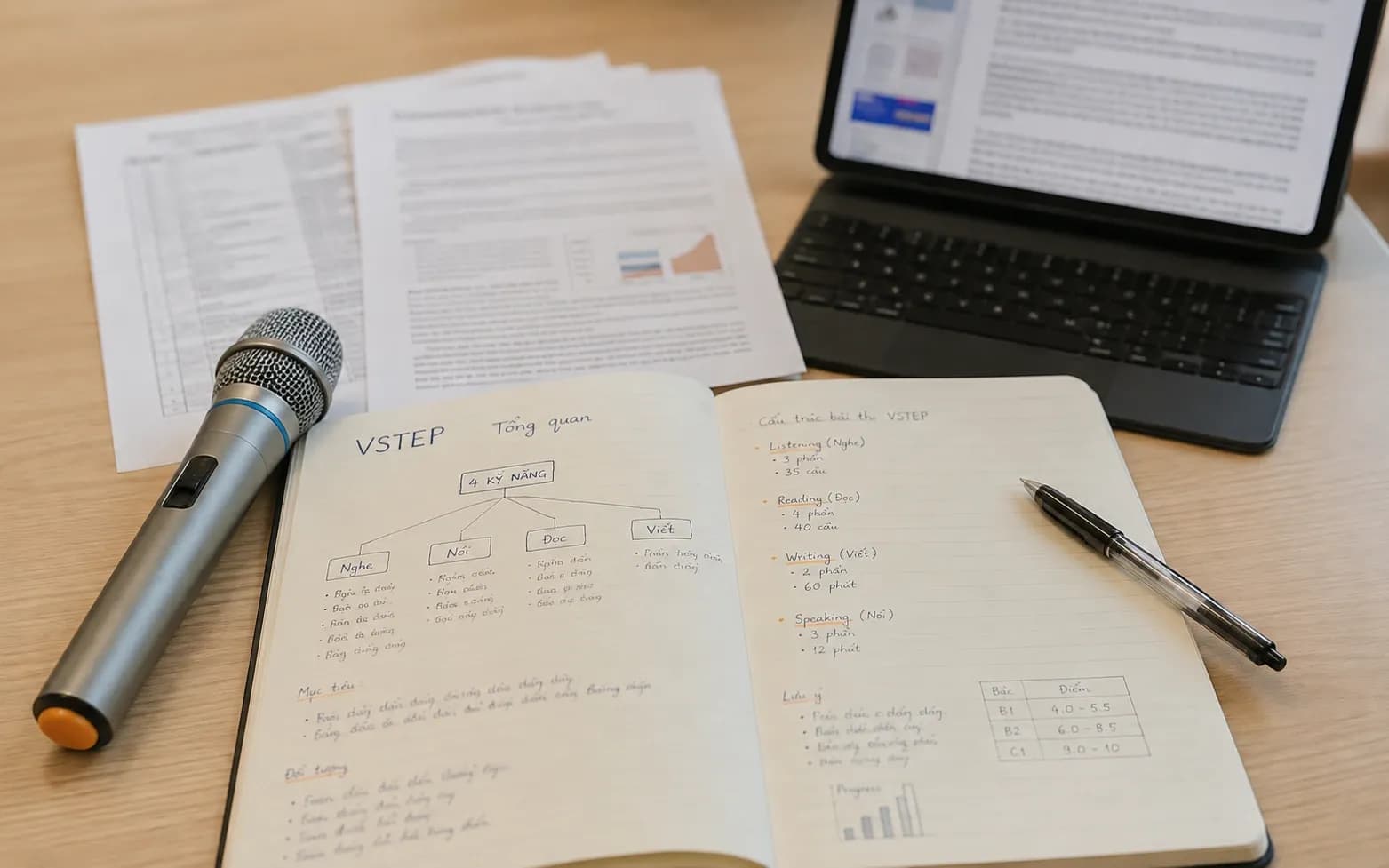
All four skills are taken in one sitting. Results are reported as a level, calculated from all four skills together.
| Skill | Tasks |
|---|---|
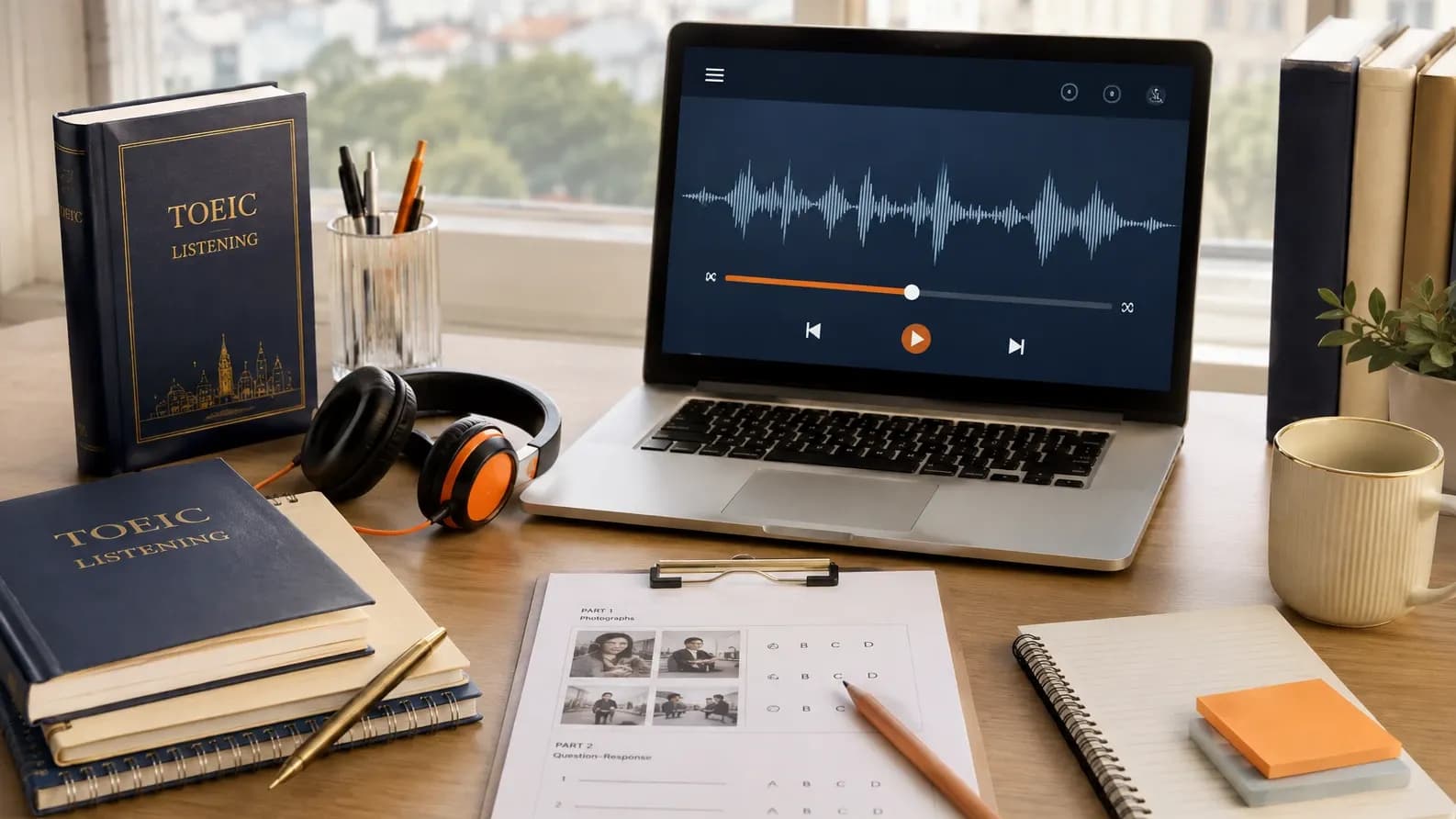
| Listening | Short conversations, instructions, extended talks |
| Reading | Several passages with multiple-choice questions |
| Writing | Two tasks: a letter or email, and an essay |
| Speaking | A face-to-face interview in three parts |
Writing and Speaking resemble IELTS in having two tasks each and being marked against criteria, so most of the preparation transfers between the two tests.
Who VSTEP suits
Three cases where VSTEP is the right choice
The receiving body names VSTEP or the six-level framework explicitly.
You need the certificate for domestic purposes with no plans to study abroad.
You want to sit locally at a lower cost than an international test.
If your destination is a degree abroad or an immigration file, most receiving bodies do not accept VSTEP — read their requirements before enrolling in a course.
How to prepare
Because all four skills run in one sitting, stamina is part of the test. At least one full timed mock belongs in the plan, placed mid-preparation rather than the week before.
And as with any four-skill test, most of your study time belongs to the weakest skill rather than the one that is easiest to drill.
The figures here come from the test provider's published materials and may change. Requirements differ by institution — read the document issued by whoever receives your application.
Topics
- Overview
- Choosing a test